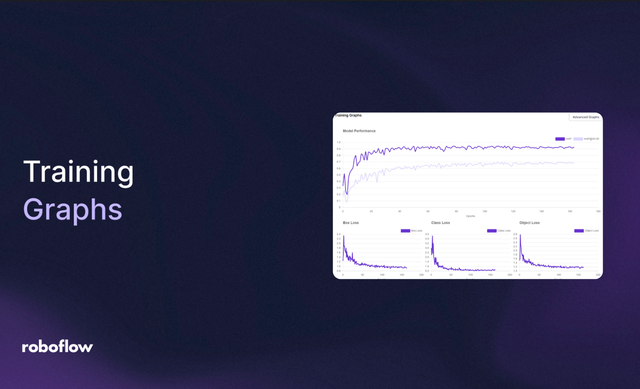
23 Feb 2026 • 15 min read Roboflow Training Graphs Guide Learn how to read Roboflow training graphs. Understand what each curve means, how the underlying metrics are computed, and how to diagnose common training problems.
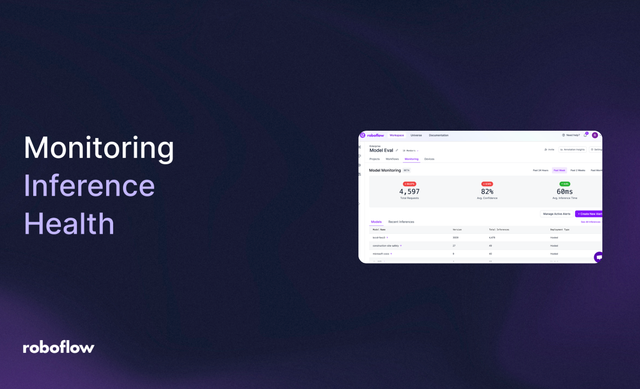
18 Feb 2026 • 7 min read How Do I Monitor Inference Health? Inference health monitoring is necessary to keep computer vision systems reliable in production. This guide explains key signals like latency, uptime, drift, and confidence trends, and shows how Roboflow helps teams track, diagnose, and improve real-world model performance.
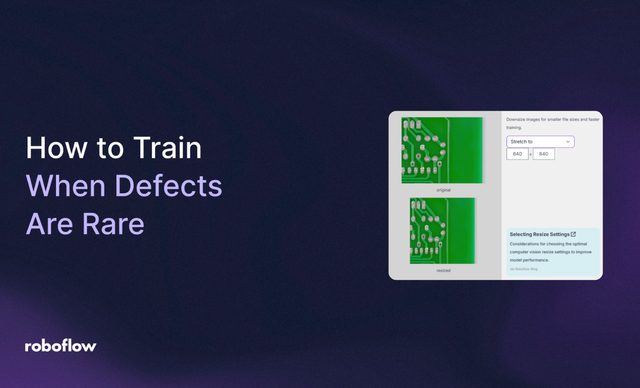
12 Feb 2026 • 10 min read How Do I Train a Model for Defects I Almost Never See? Learn how to train and deploy a rare defect detection model with Roboflow.
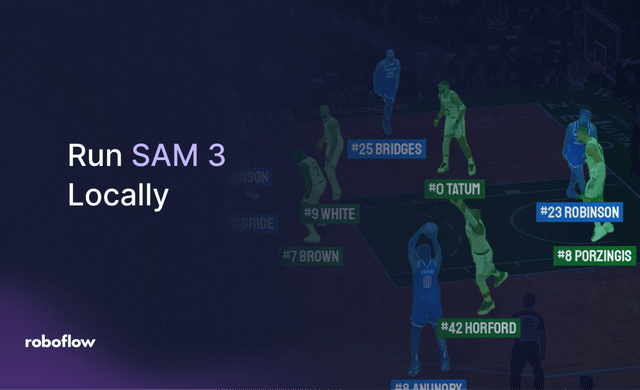
4 Feb 2026 • 7 min read Segment Anything This guide breaks down the SAM lineage - from SAM 1’s 50ms CPU inference to SAM 3’s open-vocabulary "GPT moment" - showing you how to deploy these foundation models into your production workflows today.
26 Jan 2026 • 11 min read How to Reduce Scrap in Manufacturing with Computer Vision Scrap isn't inevitable, it is a visibility problem. Most manufacturers discover defects hours after they start. Computer vision changes this by detecting issues in real-time.
22 Jan 2026 • 8 min read Using Vision-Language Models for Image Understanding Vision-language models make image understanding fast and accessible. By using simple text prompts, teams can explore datasets, discover labels, spot errors, and speed up annotation early, before training, building stronger foundations for reliable computer vision systems.
16 Jan 2026 • 9 min read Open-Vocabulary Object Detection Explained Learn how open-vocabulary object detection actually works, how it differs from promptable segmentation and vision-language models, and when it’s the right tool for real-world vision systems.
13 Jan 2026 • 13 min read Object Detection vs Vision-Language Models: When Should You Use Each? Object detection and vision-language models solve different problems. This guide explains when to use each. And how speed, cost, and reliability differ.
7 Jan 2026 • 10 min read How to Improve Cycle Time with Computer Vision Learn how computer vision measures cycle time continuously, reveals hidden waiting and handoffs, and turns cycle time from a guessed metric into a live operational signal.
29 Dec 2025 • 8 min read Spatial Intelligence As AI systems move beyond screens and into the physical world, understanding three-dimensional space becomes essential. This article explains spatial intelligence: how AI builds world models, reasons about depth and motion, and moves from recognizing images to acting reliably in real environments.
16 Dec 2025 • 6 min read How to Monitor and Improve AI Models in Production Learn how to monitor a model in production, and improve its performance.
11 Dec 2025 • 12 min read Machine Vision Lighting Types Good lighting is the foundation of any machine-vision system. This guide explains how different lighting types, filters, and deployment choices shape image quality.
8 Dec 2025 • 12 min read Vision AI Camera Calibration Guide Learn what camera calibration is, and see how to calibrate a camera step by step with Roboflow.
1 Dec 2025 • 12 min read Vision Transformer vs. CNN for Object Detection This guide explains how CNNs and ViTs differ, when to use each, and how to train and compare them directly inside Roboflow so you can choose the best architecture for your detection task.
25 Nov 2025 • 15 min read Meta SAM 3D: Introduction Understand what is SAM 3d and learn how to use SAM 3D + Roboflow to generate synthetic data and train a computer vision model.
19 Nov 2025 • 11 min read What Is Promptable Concept Segmentation (PCS)? Discover the concept of Promptable Concept Segmentation (PCS), how is it compares with other segmentation tasks such as semantic, instance, and panoptic, and the SAM 3 architecture, data and training infrastructure that makes PCS possible.
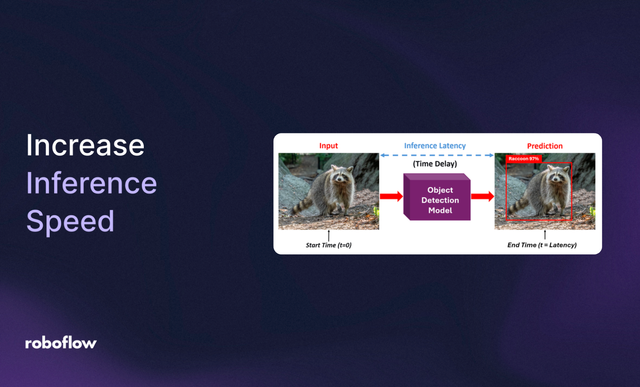
13 Nov 2025 • 10 min read Inference Latency Learn about inference latency, why it matters, and how to optimize every stage of the pipeline to build reliable, real-time vision systems.
10 Nov 2025 • 13 min read How Much Training Data Do You Need to Train a Computer Vision Model? Discover how to find the right amount of training data for your computer vision project. Learn how dataset size, balance, and annotation quality impact model accuracy.
2 Nov 2025 • 30 min read Best Mobile Object Detection Models Discover some of the best mobile object detection models, and how to easily build iOS app with Roboflow iOS SDK.
23 Oct 2025 • 7 min read The Best Data Labeling Tools Accurate data labeling is essential for training machine learning models. This guide explores top data labeling platforms, key features to consider, and pros and cons so you can choose the right tool for building better AI.
20 Oct 2025 • 9 min read Industrial Inspection Solutions Modern manufacturing runs on precision, and computer vision is redefining what’s possible on the factory floor. See how AI-powered inspection systems detect and act on defects in real time.
13 Oct 2025 • 14 min read The Best Code Editors for Computer Vision This blog explores the top code editors for developing, testing, and deploying Vision AI projects. It covers Visual Studio Code, Cursor, Colab, Jupyter, and PyCharm, explaining their key features, pros, and cons.
6 Oct 2025 • 18 min read Computer Vision Projects Explore practical computer vision projects that you can try, complete with ready-to-use Roboflow templates and workflows. Detect defects, measure dimensions, and automate visual tasks across industries.
30 Sep 2025 • 15 min read Multimodal Annotation Tools This blog explores how multimodal annotation enables AI systems to understand and connect images, text, audio, and video. It reviews tools like Roboflow, Labelbox, and SuperAnnotate highlighting their features and includes a practical example of multimodal annotation using Roboflow.