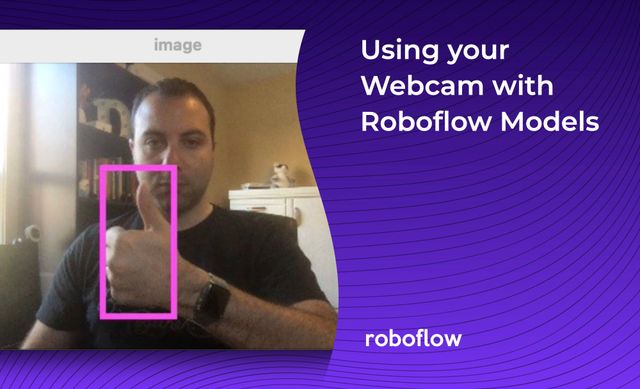
30 Mar 2021 • 4 min read How to Use Your Webcam with Roboflow Models Learn how to use your webcam with Roboflow computer vision models.
28 Mar 2021 • 6 min read Zero-Shot Content Moderation with OpenAI's New CLIP Model Learn how to use the CLIP zero-shot model to moderate visual content.
27 Mar 2021 • 4 min read Andrew Ng: "Deploying to production means you're halfway there." SUMMARY Andrew Ng's core argument at the Scale Transform conference is that deploying a model to production is the midpoint, not the finish line: real-world performance requires a continuous feedback loop where data collected from deployment improves the next model version. He makes the case for a
22 Mar 2021 • 2 min read Video Inference with Roboflow SUMMARY Running a Roboflow model on video works by splitting the footage into individual frames, sending each frame through the model for predictions, then stitching the annotated frames back into a video. Roboflow provides an open source shell script that handles all three steps, so you can visualize detection output
11 Mar 2021 • 3 min read Introducing Roboflow Support for NVIDIA Jetson SUMMARY Roboflow Inference supports the full NVIDIA Jetson family, letting teams deploy custom-trained computer vision models to edge devices using three Docker commands, with GPU acceleration enabled by default and speeds up to 15 frames per second on the Jetson Xavier NX. The on-device inference server maintains API
5 Mar 2021 • 1 min read Roboflow Changelog: March 2021 The monthly changelog showcases improvements in Roboflow over the past month. You can find the previous changelog here. In February, we had a major focus on reinforcing our foundation; after several months of rapid feature expansion we spent a considerable amount of time fixing bugs, improving infrastructure, and preparing for
1 Mar 2021 • 8 min read Running Tensorflow JS on a NVIDIA Jetson SUMMARY Running TensorFlow.js on an NVIDIA Jetson requires extra steps because Google does not ship prebuilt arm64 binaries for the Node.js backend, but two practical paths exist: use the WebGL backend in Chromium for zero-configuration GPU acceleration at around 2 to 4 frames per second, or compile
20 Feb 2021 • 3 min read Introducing Upload Batches, the Unannotated Queue, and Mark as Null SUMMARY Roboflow introduced three annotation workflow features to help teams manage iterative dataset collection: Upload Batches automatically groups each new image upload so teams can divide labeling work without merging separate datasets; the Unannotated Queue makes it easy to track exactly which images still need labels; and Mark as Null
3 Feb 2021 • 2 min read Roboflow Changelog: February 2021 Welcome to our monthly roundup post of new features and enhancements. You can find the previous changelog here. The biggest new features released this month were transfer learning and Label Assist. Roboflow Organize * Announced teams for all (now teams of up to 3 people can collaborate on the Starter Plan
26 Jan 2021 • 11 min read Using Unity Perception to train an object detection model with synthetically generated images SUMMARY Unity's Perception package can generate perfectly annotated synthetic images using only software, giving computer vision projects a way to bootstrap training data before real-world images are available. This tutorial walks through setting up Unity 2019.4 LTS with the Perception package, generating a labeled synthetic dataset,
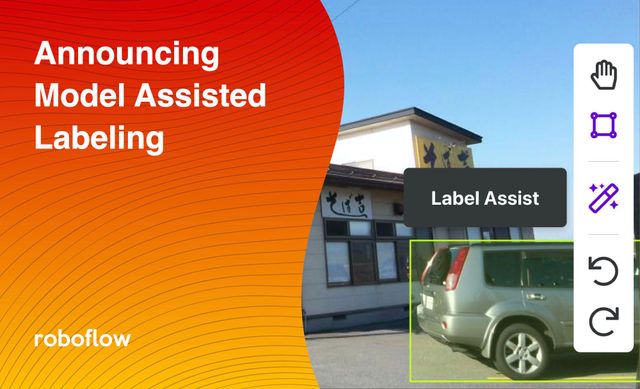
25 Jan 2021 • 2 min read Launch: Model Assisted Labeling SUMMARY Roboflow Label Assist cuts annotation time by using your already-trained Roboflow models to pre-populate bounding boxes on new images, so annotators spend time only correcting errors rather than drawing every label from scratch. Public model support starting with 80 Microsoft COCO classes is included free on the
8 Jan 2021 • 6 min read How to Try CLIP: OpenAI's Zero-Shot Image Classifier Earlier this week, OpenAI dropped a bomb on the computer vision world.
6 Jan 2021 • 3 min read Using the Upload API to Collect Images from the Wild SUMMARY Production computer vision models degrade without a feedback loop that continuously surfaces real-world edge cases. The Roboflow Upload API lets you pipe images directly from deployed applications into a Roboflow dataset, so failures users encounter in the field can be flagged, labeled, and folded back into the next
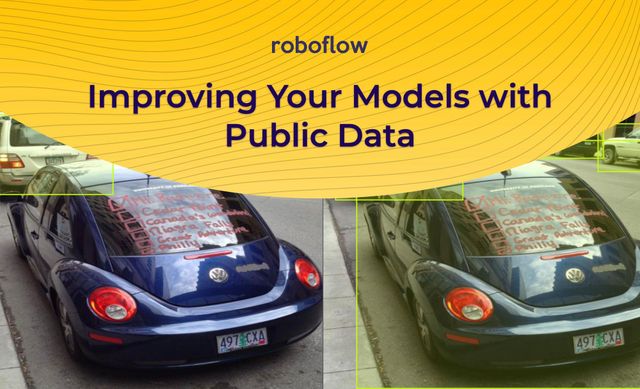
6 Jan 2021 • 4 min read Using Public Datasets to Improve your Computer Vision Models SUMMARY When a model is underperforming and more field collection is impractical, merging your dataset with publicly available annotated data is often the fastest way to improve accuracy. This post demonstrates the approach using COCO and OpenImages car images, where doubling the training set by adding 1,000 OpenImages examples
3 Jan 2021 • 2 min read Roboflow Changelog: January 2021 Welcome to our monthly changelog where we catalog our recent feature additions and improvements. If you missed it, you can find last month's changelog here. This month we launched Roboflow Annotate, an integrated image annotation tool included in all Roboflow plans. In the first few weeks, over 1500
28 Dec 2020 • 2 min read Get a Hosted API for your Object Detection Model SUMMARY After training a custom object detection model, the hardest part is often deploying it without managing servers that sit idle or buckle under load. Roboflow Infer addresses this by training a model on your labeled dataset and immediately exposing it as a hosted API that scales with demand, so
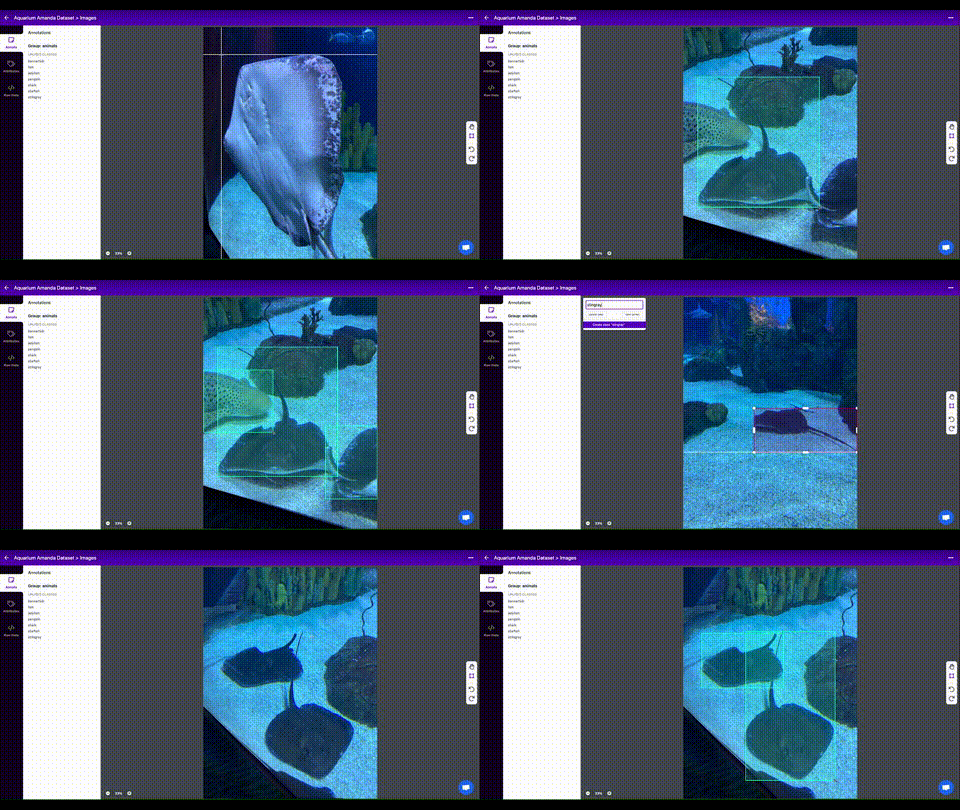
8 Dec 2020 • 2 min read Introducing Roboflow Annotate SUMMARY Roboflow Annotate is a self-serve image annotation tool built directly into the Roboflow platform, removing the friction of managing a separate labeling tool outside your pipeline. The integrated design supports team collaboration from a single source of truth and makes it straightforward to jump in and out of
4 Dec 2020 • 1 min read Roboflow Changelog: December 2020 Welcome to the first of our monthly changelogs, where we will be cataloging our recent feature additions and improvements. Roboflow Organize * Added ability to rebalance train/test split * Clarified pro plan features in-app * Sped up thumbnail generation * Added image upload by URL to the upload API * Paginated the image
14 Oct 2020 • 31 min read Software Engineering Daily Podcast Roboflow co-founder Brad Dwyer was a guest on the Software Engineering Daily podcast. Listen on your favorite podcast app (Apple Podcasts, Spotify, Overcast, Stitcher), or see the full transcript below. Software Engineering Daily: Roboflow: Computer Vision Models with Brad Dwyer on Apple PodcastsTraining a computer vision model is not
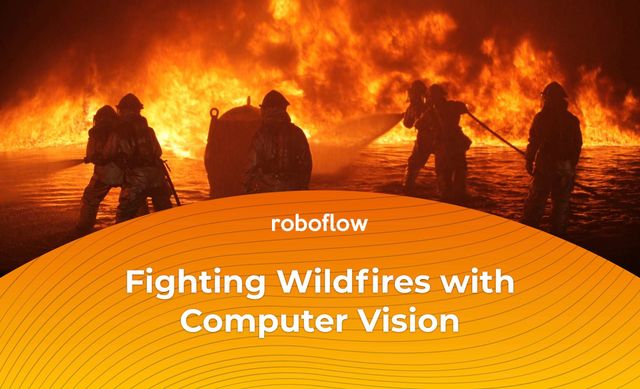
12 Oct 2020 • 2 min read Fighting Wildfires with Computer Vision SUMMARY Abhishek Ghosh, a graduate student at Texas A&M working with AI For Mankind, trained an EfficientDet D0 computer vision model to detect early smoke from forest fires using images from weather towers. Using Roboflow Pro, he applied advanced augmentations and a static crop along the horizon line
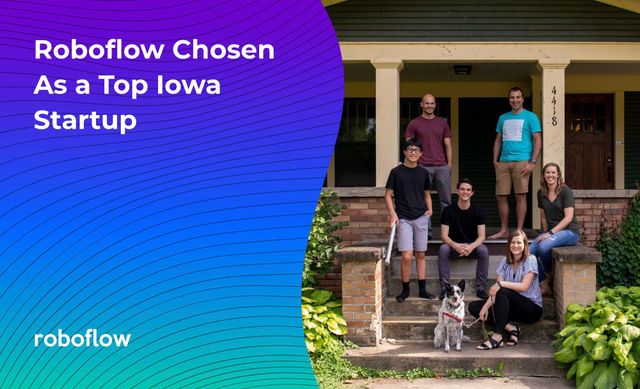
6 Oct 2020 • 1 min read Roboflow Wins $15,000 Award Roboflow is honored to be named as one of Iowa's most promising startups and one of the top 3 winners of the Pappajohn Entrepreneurial Venture Competition. The annual awards honor companies with innovative technology that have grown quickly. Since launching in January, Roboflow has helped over 8,000
5 Oct 2020 • 24 min read Glossary of Common Computer Vision Terms Computer Vision (and Machine Learning in general) is one of those fields that can seem hard to approach because there are so many industry-specific words (or common words used in novel ways) that it can feel a bit like you're trying to learn a new language when you're trying to get started.
22 Sep 2020 • 3 min read Training Robots to Identify Other Robots SUMMARY Amitabha Banerjee trained a computer vision model to teach his Anki Vector robot to detect other robots, addressing a real gap since the Vector's onboard AI handles speech and human recognition but not robot-to-robot identification. He collected 303 images from the robot's own
18 Sep 2020 • 5 min read How to Build Computer Vision Models with Apple CreateML SUMMARY Apple CreateML provides a no-code interface for training image classification and object detection models that deploy as CoreML files directly into iOS and macOS apps, but its proprietary JSON annotation format is not widely supported by standard labeling tools. This tutorial uses Roboflow as the format converter: label