1 Jul 2022 • 16 min read How to Train a YOLOv6 Model on a Custom Dataset Learn how to train a YOLOv6 object detection model on a custom dataset.
2 Apr 2022 • 10 min read How to Deploy Computer Vision Models: Best Practices In this guide, we walk through the fundamentals of deploying vision models and the questions you should evaluate when deciding how to deploy a model.
20 Oct 2021 • 6 min read Let's Talk About Company Culture Company culture is a feeling in the air, the social norms of a group, the manifestation of collective goals and beliefs, and the one intangible thing that can make or break a growth stage company. For some, culture becomes a priority too late in the business. It starts to become
22 Sep 2021 • 1 min read What is PaddlePaddle? SUMMARY PaddlePaddle (PArallel Distributed Deep LEarning) is Baidu's open-source deep learning framework, comparable in scope to PyTorch and TensorFlow, providing the core primitives needed to build and train deep learning models. It gained attention in computer vision through PP-YOLO, a model in the YOLO family that
20 Sep 2021 • 1 min read What is PyTorch? SUMMARY PyTorch is Facebook's open-source machine learning framework, originally popularized in academic research and now widely used in production systems. It provides the foundational building blocks for deep learning across computer vision, natural language processing, and audio, and serves as the base for higher-level frameworks like
16 Sep 2021 • 3 min read We Raised a $20M Series A to Continue Democratizing Computer Vision Today, Roboflow is excited to announce our $20 million Series A led by Craft Ventures to expand on our mission to give software the sense of sight. Lachy Groom, who co-led the seed with Craft, also participated in the round. Additionally, we welcomed new investment from leaders like Jack
9 Sep 2021 • 3 min read What is TensorRT? SUMMARY TensorRT is NVIDIA's inference optimization framework, built to run machine learning models as fast as possible on NVIDIA GPU hardware via CUDA cores. To use it, you typically train in PyTorch or TensorFlow and then convert your model to TensorRT format. This post covers the CUDA vs
30 Aug 2021 • 1 min read What is Amazon Rekognition? SUMMARY Amazon Rekognition is an off-the-shelf computer vision API that detects and classifies a fixed set of common objects (furniture, plants, and similar generic categories) from images sent via HTTP. It works well for those predefined categories, but if your application needs to detect domain-specific objects not
16 Aug 2021 • 1 min read What is CoreML? SUMMARY CoreML is Apple's on-device machine learning inference framework, designed to run models efficiently on iPhones and other Apple hardware by routing computation through Apple's Neural Engine for lower latency and reduced power draw. Models are stored as .mlmodel files and can be created with
30 Jul 2021 • 2 min read Roboflow for Students and Universities We've seen tremendous interest in Roboflow from the research community. Faculty and students from institutions ranging from California to Malta to Taiwan have been using Roboflow to accelerate their computer vision work.
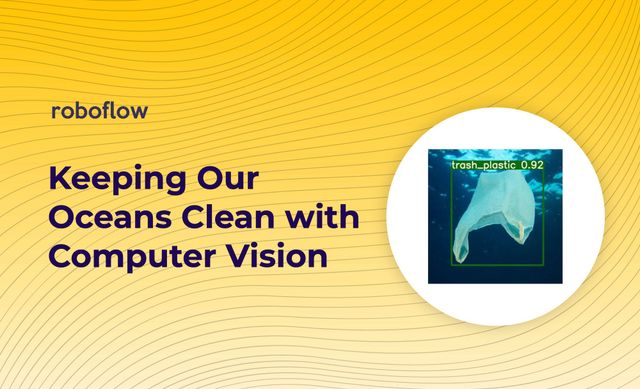
19 Jul 2021 • 3 min read Using Computer Vision to Clean the World's Oceans SUMMARY Researchers from CSU Monterey Bay, The Ocean Cleanup, and UC San Diego built a computer vision model to detect underwater plastic debris for autonomous underwater vehicles. Using a 3,200-image dataset collected from real California field sites and annotated with Roboflow, the team compared YOLOv4, YOLOv4-tiny, and
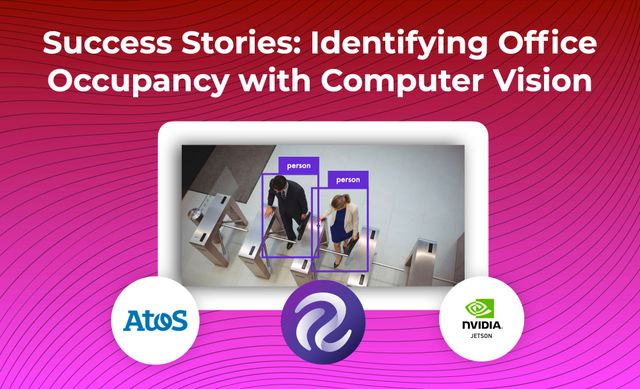
7 Jul 2021 • 7 min read How Atos Uses Computer Vision to Monitor Office Occupancy SUMMARY Atos, a digital transformation firm with over 100,000 employees, built a privacy-first office occupancy counter using computer vision and Roboflow, going from initial data collection to a production client demo running on an NVIDIA Jetson Nano in under 60 days. The system connects to existing security camera
13 Jun 2021 • 5 min read How to Train with Microsoft Azure Custom Vision and Roboflow SUMMARY Teams with existing Microsoft Azure credits can route their Roboflow datasets directly into Azure Custom Vision for training by linking API keys once at the workspace level. After that connection is established, any versioned Roboflow dataset (including preprocessing and augmentation steps applied in Roboflow) can be exported to Azure
19 May 2021 • 6 min read How Computer Vision Streamlines Risk Avoidance Workflows in Oil & Gas SUMMARY In Canadian oil and gas operations, regulators require companies to identify and notify landowners whose property falls within a proposed pipeline's consultation area, a task that traditionally meant manually digitizing house locations one by one in ArcGIS. This guest post by Douglas Long describes replacing that manual
17 May 2021 • 4 min read Prompt Engineering: The Magic Words to using OpenAI's CLIP SUMMARY OpenAI's CLIP model performs zero-shot image classification by matching text prompts to image content, but the exact wording of each prompt has a significant effect on accuracy. This post walks through that sensitivity using a rock, paper, scissors hand-sign dataset, showing how prompts like "
5 May 2021 • 3 min read Partnering with Luxonis and OpenCV for Seamless Deployment to OpenCV AI Kit SUMMARY Roboflow and Luxonis have partnered to let users train a custom computer vision model and deploy it to the OAK-1 or OAK-D via a Docker container, eliminating the manual steps of model format conversion to OpenVINO and dependency setup that previously caused silent accuracy regressions. After training
26 Apr 2021 • 3 min read Image Augmentations for Aerial Datasets Learn how to apply image augmentations to aerial datasets for use in training computer vision models.
11 Apr 2021 • 3 min read Our Favorite Computer Vision Courses SUMMARY The right computer vision course depends heavily on what you want to build and how much you already know. This guide organizes recommendations by learner type: Andrew Ng's AI for Everyone for non-technical conceptual grounding, fast.ai and Roboflow's own tutorials for practitioners who
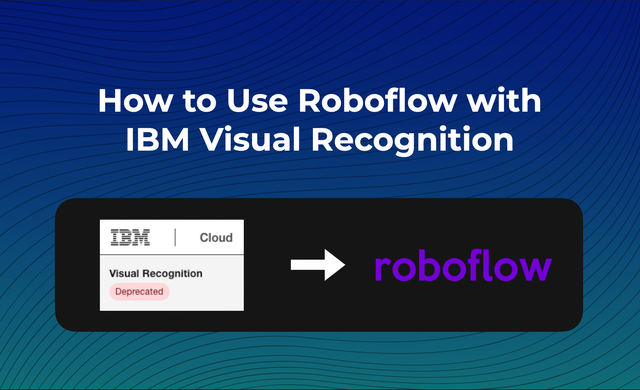
4 Apr 2021 • 7 min read How to Use Roboflow with IBM Visual Recognition (IBM Watson vs Roboflow) SUMMARY IBM shut down IBM Visual Recognition in 2021, leaving teams mid-project and needing a path forward. This post walks through two methods for exporting data out of IBM Visual Recognition and IBM Cloud Annotations, then compares what to look for in a replacement platform, covering annotation speed, active
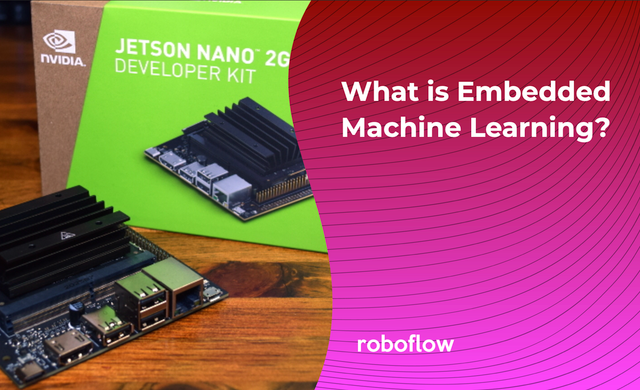
20 Mar 2021 • 4 min read What Is Embedded Machine Learning? SUMMARY Embedded machine learning is the practice of running inference directly on microcontrollers and low-power hardware, such as a Raspberry Pi, NVIDIA Jetson, or Luxonis OAK, rather than sending data to a cloud server. Shrinking model sizes and cheaper, faster hardware have made this practical: inference requires far fewer
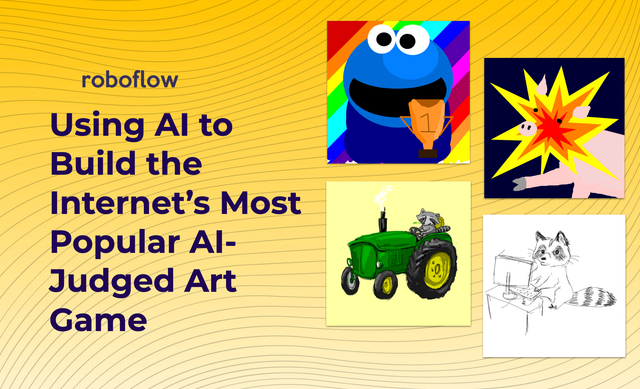
14 Mar 2021 • 9 min read How We Built Paint.wtf, an AI Game with 150,000+ Submissions that Judges Your Art SUMMARY Paint.wtf is an online drawing game built by Roboflow and Booste that uses OpenAI's CLIP model to score user submissions against absurdist text prompts, ranking drawings by how closely their image embeddings match the prompt's text embedding. GPT-2 generated the bulk of the
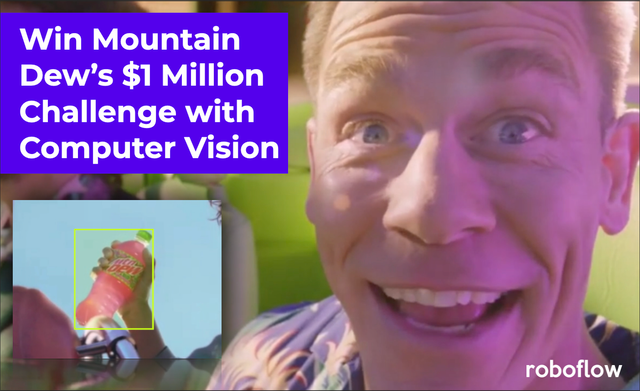
8 Feb 2021 • 4 min read Using Computer Vision to Help Win $1 Million in Mountain Dew's Big Game Contest SUMMARY Mountain Dew's Super Bowl LV ad challenged viewers to count the exact number of bottles in the commercial for a $1 million prize, and this post builds an object detection model to assist with that count. The 30-second video was sampled at three frames per second
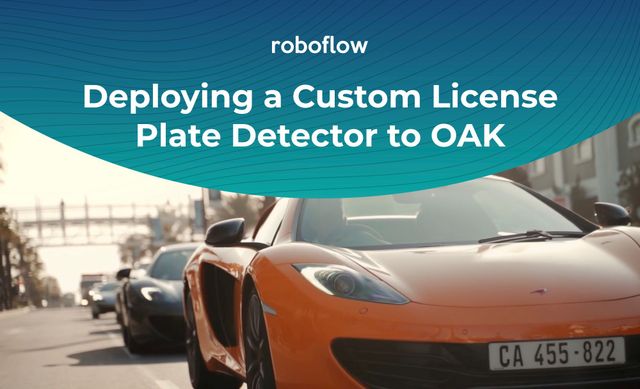
8 Feb 2021 • 7 min read How to Train and Deploy a License Plate Detector to the Luxonis OAK In this post, we will leverage Roboflow and the Luxonis OAK to train and deploy a custom license plate model to your OAK device.