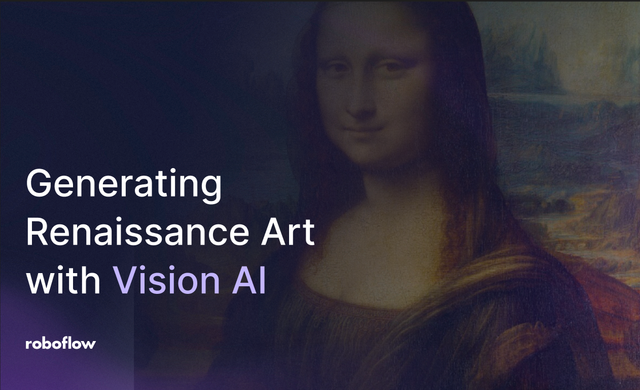
21 Apr 2026 • 2 min read Generating Renaissance Art with Computer Vision How two high schoolers built GAN art in 24 hours: a DCGAN trained on 300 Renaissance paintings, augmented in Roboflow to win their hackathon.
31 Mar 2026 • 4 min read How to Run Jupyter Notebooks on an Apple M1 Mac Learn how to run Jupyter Notebooks on Apple M1 Macbooks.
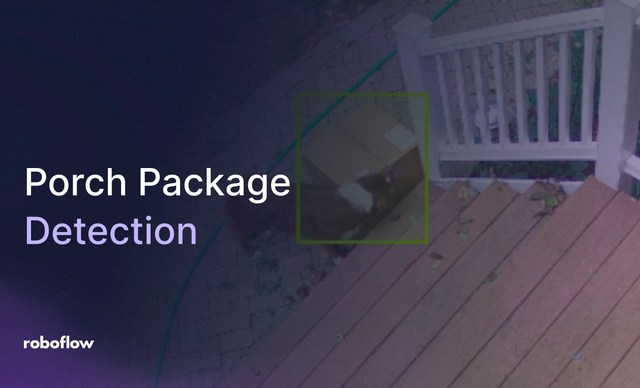
3 Mar 2026 • 3 min read Porch Box Detection Using Computer Vision How a developer built local package detection with a $100 Jetson Nano and an IP camera: 15 starter images, iterative retraining, no cloud fees.
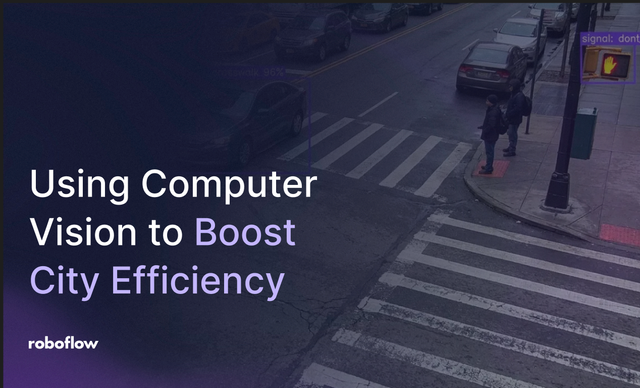
4 Jan 2026 • 4 min read Using Computer Vision to Boost Cities' Efficiency How a data scientist built traffic violation detection on existing CCTV cameras: NYC webcam data, transfer learning from COCO, 50 fps inference.
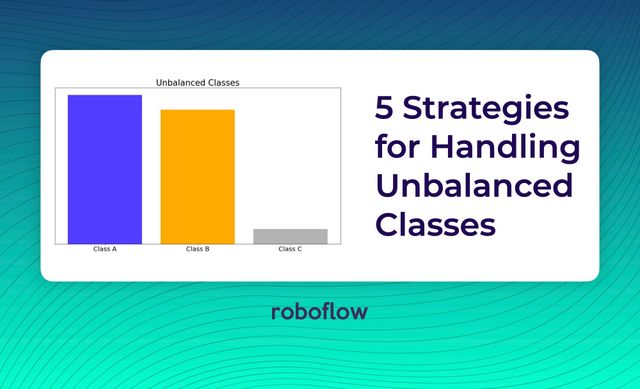
3 Jan 2025 • 8 min read 5 Strategies for Handling Unbalanced Classes in Machine Learning SUMMARY Class imbalance causes models to underperform on minority classes because the training distribution does not reflect the real-world distribution of what matters. Five strategies address this: gathering more data from underrepresented classes, generating synthetic samples through augmentation, undersampling the majority class via random selection, oversampling the minority class
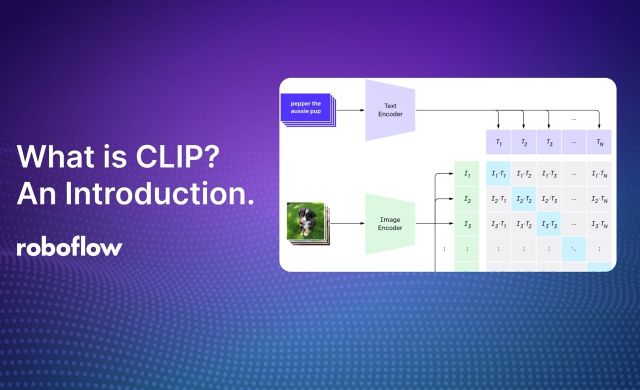
1 Sep 2024 • 15 min read What is CLIP? Contrastive Language-Image Pre-Training Explained. CLIP is an open source, multimodal computer vision model developed by OpenAI. Learn what CLIP is in this guide.
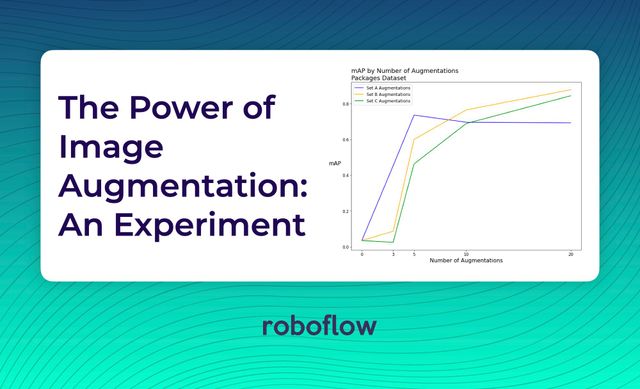
3 May 2021 • 8 min read The power of image augmentation: an experiment SUMMARY Image augmentation increases effective training set size by applying random transformations to existing images, but knowing how much to augment and which transforms to apply depends on your dataset. This experiment tests three variables across three public datasets of different sizes (26, 196, and 665 images of packages, raccoons,
25 Apr 2021 • 6 min read How We at Roboflow Do Remote Work We'd like to think we've worked remotely pretty successfully: we raised a seed round, we've come in first place on the Pioneer leaderboard for a record-breaking 25-weeks in a row, we publish at least five pieces of content each week (check out
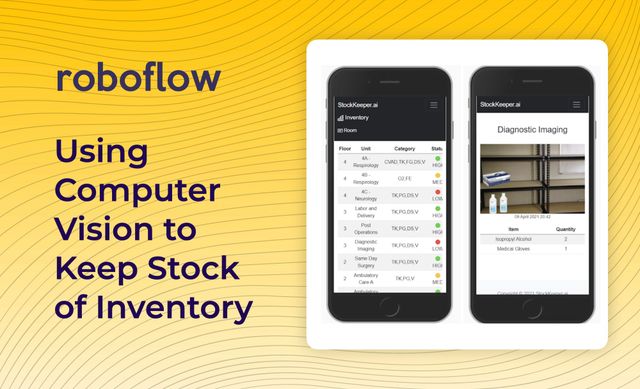
18 Apr 2021 • 3 min read How to Use Computer Vision to Keep Stock of Inventory Learn how to use computer vision to track inventory in logistics facilities.
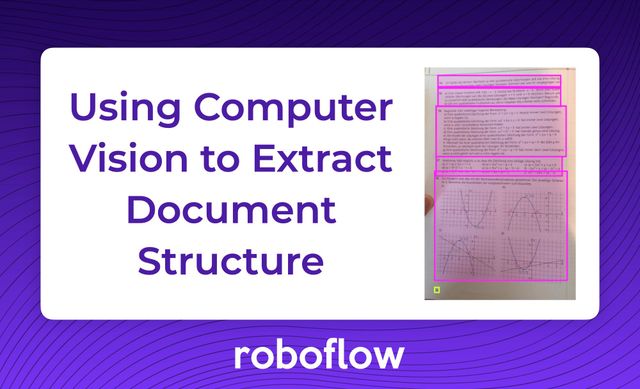
6 Apr 2021 • 3 min read Using Computer Vision to Extract Document Structure SUMMARY A student in Germany trained a custom object detection model on roughly 1,000 scanned school book pages to identify individual tasks and page numbers, reducing the data that needs to be transmitted during remote learning by sending extracted text instead of full images. The project used Roboflow Annotate
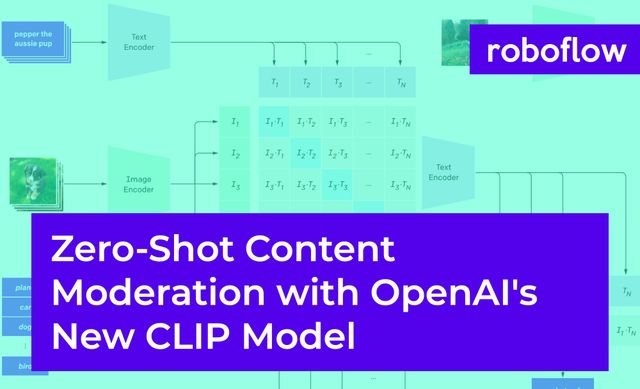
28 Mar 2021 • 6 min read Zero-Shot Content Moderation with OpenAI's New CLIP Model Learn how to use the CLIP zero-shot model to moderate visual content.
24 Mar 2021 • 1 min read Webinar: How to Build a Detectron2 Model with Roboflow and Paperspace Gradient SUMMARY This post announces and links the recording for a joint Roboflow and Paperspace webinar that walks through training a Detectron2 object detection model on a blood cell count dataset. The session covers accessing public image datasets through Roboflow, applying preprocessing and augmentation, and running GPU-backed training notebooks on
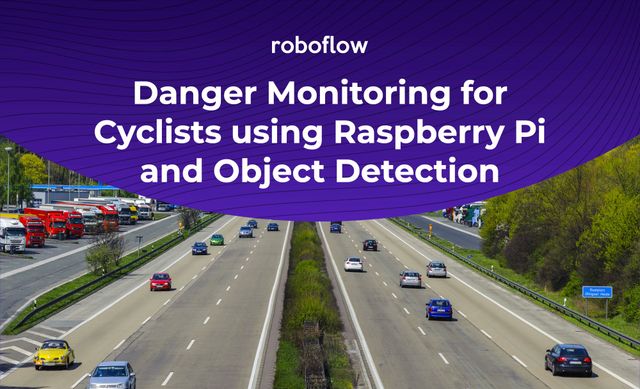
21 Mar 2021 • 4 min read Danger Monitoring for Cyclists using Raspberry Pi and Object Detection SUMMARY This project builds a low-cost cyclist danger monitor using a Raspberry Pi 4, a Google Coral TPU stick for faster inference, and an LED traffic light that warns the rider when cars or bicycles are detected in proximity. The model was trained on three datasets totaling over 6,
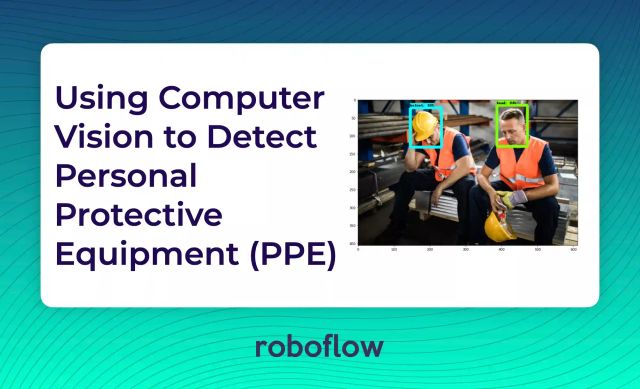
15 Mar 2021 • 3 min read Using Computer Vision to Detect Personal Protective Equipment SUMMARY Construction site PPE compliance can be automated with an object detection model that flags safety violations, such as missing hard hats, directly from site images. Data scientist Jaco Lau built this using Roboflow for image annotation, class balancing, and model training, then deployed the detector inside a Streamlit application
1 Mar 2021 • 3 min read 5 Emerging Trends in Computer Vision Applications from OpenCV's AI Competition SUMMARY Reviewing over 200 project proposals submitted to the 2021 OpenCV AI Competition, five application patterns stand out across the more than 1,200 competing teams: assisting the visually impaired with spatial awareness, improving workplace safety by identifying hazardous zones, monitoring COVID protocol compliance, and tracking animal health and conservation
23 Feb 2021 • 8 min read How to Use Roboflow and Streamlit to Visualize Object Detection Output SUMMARY This tutorial builds a blood cell detection app that trains an object detection model in Roboflow to identify platelets, red blood cells, and white blood cells, then wraps the model's API in a Streamlit interface so users can upload images, adjust confidence thresholds with a slider, and
22 Feb 2021 • 3 min read How to Use Google Earth Engine and Python API to Export Images to Roboflow SUMMARY Google Earth Engine's Python API can pull multispectral imagery from the Sentinel-2 satellite and export it as image files ready to upload directly into Roboflow for training computer vision models on geographic data. The tutorial covers authenticating to both Google Earth Engine and Google Drive, selecting
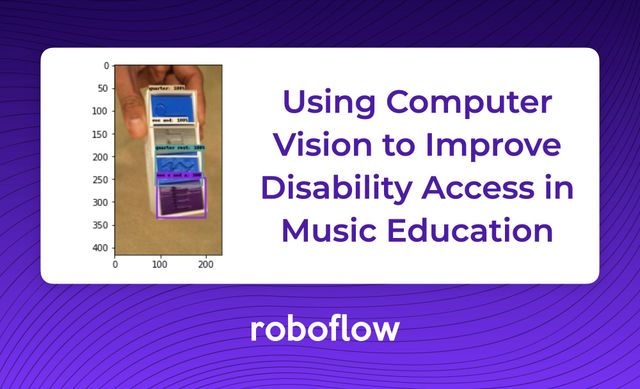
15 Feb 2021 • 3 min read Using Computer Vision to Improve Disability Access in Music Education SUMMARY A high school student built the Mehek Box, a tactile rhythm education tool for students with disabilities, and extended it with a computer vision feature that recognizes physical rhythm blocks via an in-app camera. She trained an EfficientDet-D0 object detection model on a custom dataset built from
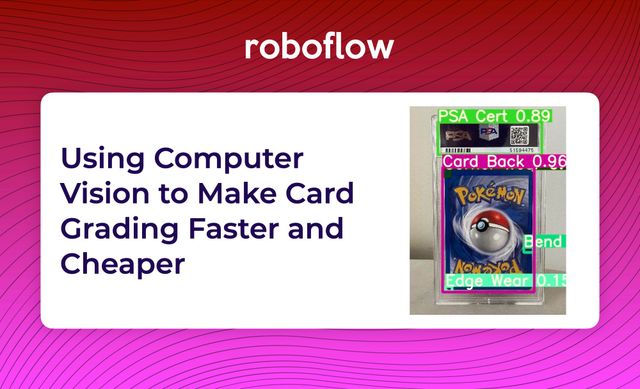
8 Feb 2021 • 4 min read Using Computer Vision to Make Card Grading Faster and Cheaper SUMMARY Professional card grading is slow and expensive, and a large portion of the assessment (edge wear, corner wear, centering, surface damage) maps well to computer vision. This guest post describes a prototype that uses OpenCV for edge detection and card alignment checks, then trains a YOLOv5 model on a
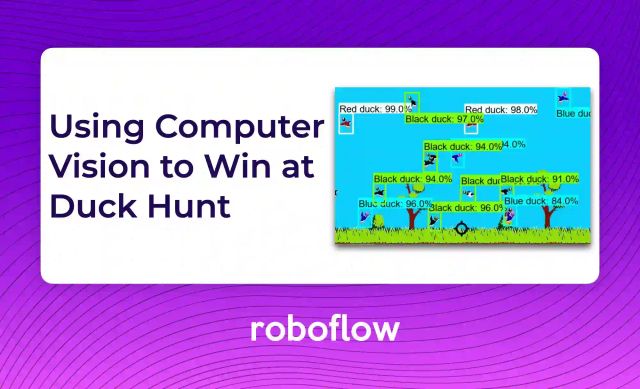
31 Jan 2021 • 3 min read Using Computer Vision to Win at Duck Hunt Can we use object detection to automate identifying moving objects on a screen? Abhinav Mandava leverages Roboflow to create an aimbot (which automates aiming and firing for the player) for Duck Hunt.
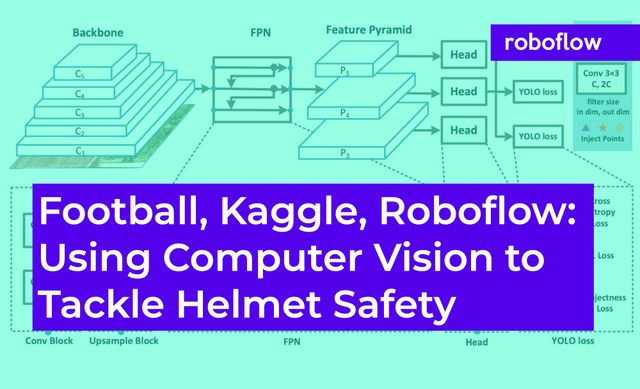
28 Dec 2020 • 6 min read Football, Kaggle, Roboflow: Using Computer Vision to Tackle Helmet Safety SUMMARY This post walks through a Kaggle competition case study focused on detecting American football helmet impacts to help researchers understand conditions that contribute to traumatic brain injury. The authors use Scaled-YOLOv4, selected for its inference speed, and use Roboflow to preprocess and augment the provided training images. A
21 Dec 2020 • 4 min read Tackling the Internet of Things with Roboflow: Object Detection Apps on Android Joo chan Kim, PhD student, is developing an object detection application for Android devices that can identify specific IoT sensors by using a custom detection model.
15 Dec 2020 • 5 min read Apple's M1 is up to 3.6x as fast at training machine learning models We compared the Apple M1 chip to the Intel Core i5 chip on an object detection task using Create ML.
3 Dec 2020 • 8 min read Scaled-YOLOv4 is Now the Best Model for Object Detection SUMMARY Scaled-YOLOv4 set a new state-of-the-art result for object detection on the Microsoft COCO benchmark at the time of its publication, surpassing Google's EfficientDet across both the speed and accuracy ends of the performance frontier. The model achieves this by scaling the depth, stages,