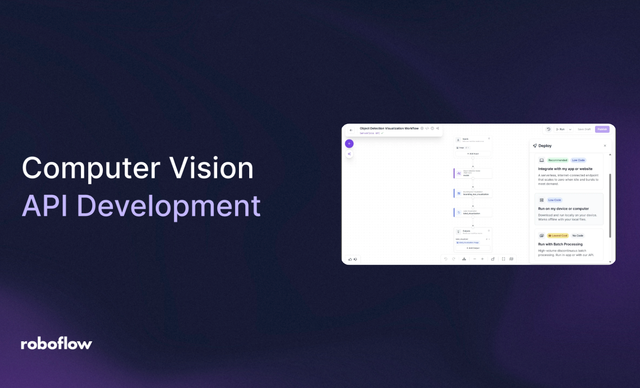
2 Feb 2026 • 11 min read No-Code Computer Vision API Development In this guide, you’ll use Roboflow Workflows’ drag-to-connect blocks to build a complete object detection API - then deploy in minutes.
1 Feb 2026 • 19 min read Best Computer Vision Platforms and Solutions Compare the top computer vision platforms in 2026.
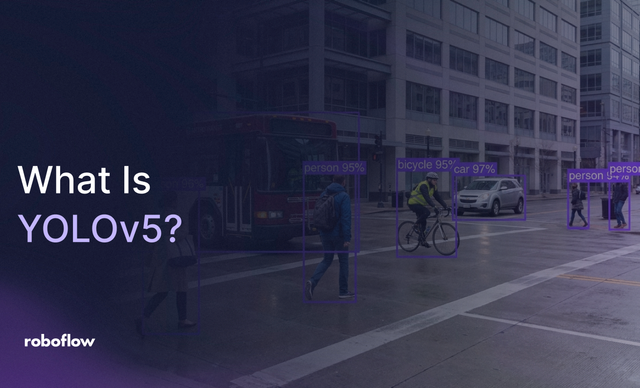
1 Feb 2026 • 13 min read What Is YOLOv5? Architecture, Sizes, and How It Works In this article, we discuss what is new in YOLOv5, how the model compares to YOLOv4, and the architecture of the new v5 model.
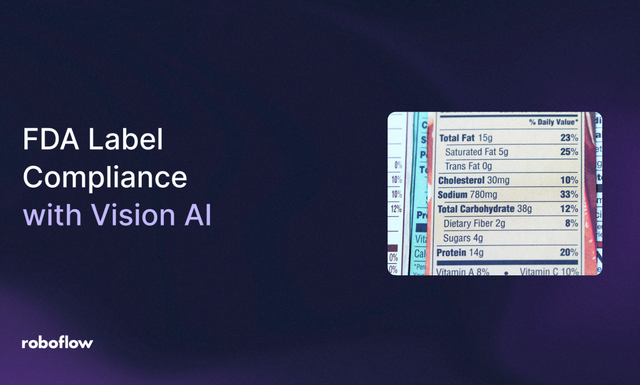
30 Jan 2026 • 7 min read Automate FDA Label Compliance with Computer Vision See how to automate FDA food label compliance with computer vision - detecting required label components, extracting text, and validating it at scale using Roboflow models and Workflows.
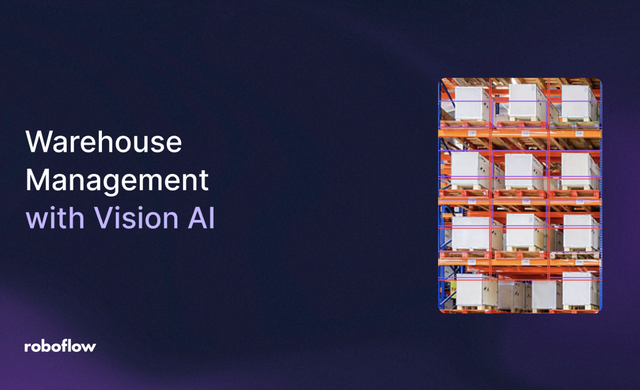
29 Jan 2026 • 9 min read Real-Time Capacity Planning for Warehouse Rack Occupancy Build a real-time warehouse capacity workflow that turns rack images into structured, machine-readable occupancy data.
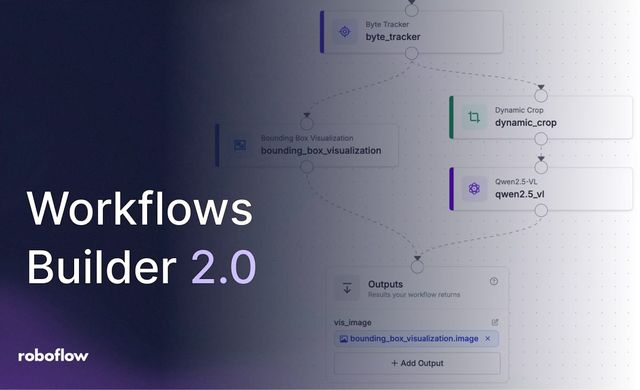
28 Jan 2026 • 2 min read Launch: Workflows Builder 2.0 Workflows Builder 2.0 is here with a drag-to-connect interface that makes building and understanding computer vision pipelines faster and clearer.
27 Jan 2026 • 10 min read Sensor Fusion: Enhancing RTLS with Computer Vision Learn how combining RF signals like BLE with computer vision creates a hybrid tracking system that stabilizes IDs, eliminates false positives, and unlocks a new class of reliable, real-world vision applications.
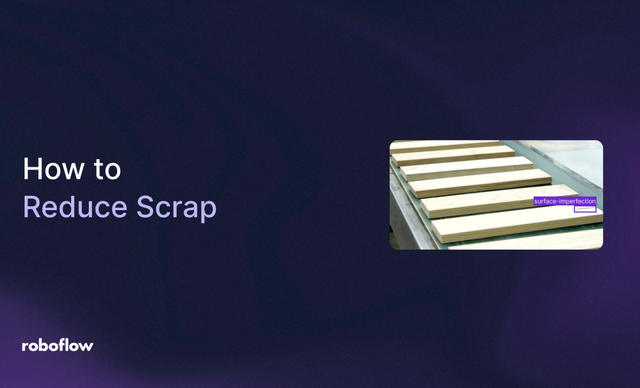
26 Jan 2026 • 11 min read How to Reduce Scrap in Manufacturing with Computer Vision Scrap isn't inevitable, it is a visibility problem. Most manufacturers discover defects hours after they start. Computer vision changes this by detecting issues in real-time.
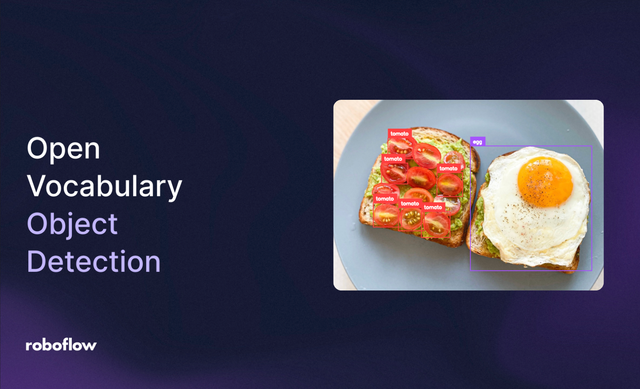
26 Jan 2026 • 10 min read Open-Vocabulary Object Detection Using Qwen3-VL in Google Colab See how to run Qwen3-VL in Google Colab to build a prompt-driven detection pipeline that turns “find a yellow taxi” into structured, production-ready results.
23 Jan 2026 • 6 min read How to Localize a Drone Without a GPS Sensor See how to localize a drone using nothing but what it can see by combining SAM3’s zero-shot segmentation with classical template matching, all orchestrated in Roboflow Workflows.
22 Jan 2026 • 7 min read How to Use the Segment Anything Model (SAM) Segment Anything (SAM) is a computer vision model developed by Meta AI. In this guide, you will learn how to use SAM on your own data.
22 Jan 2026 • 5 min read New RF-DETR Segmentation Checkpoints from Nano to 2XLarge RF-DETR-Seg brings real-time instance segmentation to the same level RF-DETR already reached in object detection, with strong accuracy across a full range of model sizes from Nano to 2XLarge.
22 Jan 2026 • 8 min read Using Vision-Language Models for Image Understanding Vision-language models make image understanding fast and accessible. By using simple text prompts, teams can explore datasets, discover labels, spot errors, and speed up annotation early, before training, building stronger foundations for reliable computer vision systems.
21 Jan 2026 • 6 min read How to Use Qwen3-VL in Roboflow In this guide, build an image-understanding workflow in Roboflow that turns Qwen3-VL into a production-ready vision agent you can run via API or on your own GPU.
21 Jan 2026 • 12 min read Computer Vision Applications Computer vision applications are reshaping industries across the globe, enhancing efficiency, safety, and quality in ways that were previously unimaginable.
20 Jan 2026 • 6 min read Visual Assembly Verification with Computer Vision Manufacturers need to know that items are assembled correctly. This guide shows how to build visual assembly verification that compares products to a reference image and returns a clear pass/fail verdict with exactly what’s wrong.
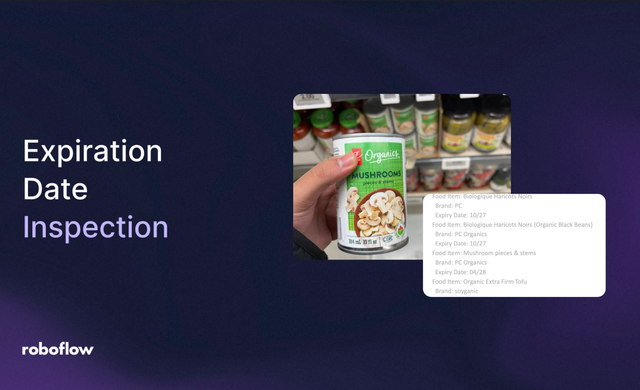
16 Jan 2026 • 5 min read Expiration Date Inspection: How to Use Gemini + Roboflow Build a computer vision workflow that reads date codes in any format, uses Gemini to understand what they mean, and turns grocery photos into clean, structured expiry data with Roboflow Workflows.
16 Jan 2026 • 9 min read Open-Vocabulary Object Detection Explained Learn how open-vocabulary object detection actually works, how it differs from promptable segmentation and vision-language models, and when it’s the right tool for real-world vision systems.
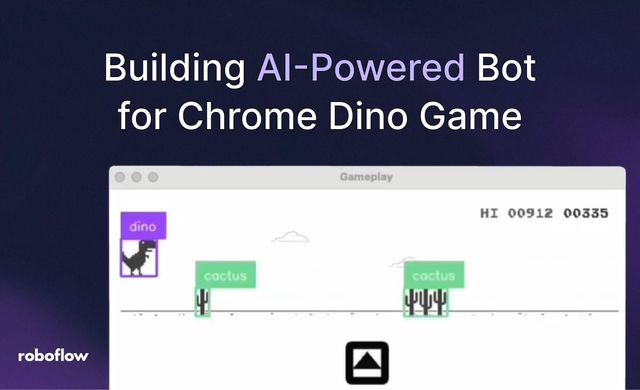
16 Jan 2026 • 5 min read Building an AI-powered Bot to Beat the Chrome Dino Game SUMMARY This tutorial walks through a complete computer vision project that trains an RF-DETR model to detect the Dino, Cactus, and Bird objects in the Chrome Dino game, then uses model predictions at inference time to drive keyboard actions via pynput. Dataset images were captured by screen-recording manual
15 Jan 2026 • 4 min read How to Connect Roboflow to FactoryTalk Optix This tutorial shows how to send live computer vision results from Roboflow directly into FactoryTalk Optix. See how to build a workflow that counts objects and updates a real-time HMI display using OPC UA.
15 Jan 2026 • 12 min read RF-DETR vs. YOLO: Choosing the Right Architecture for your Project Explore key differences in architecture, real-world accuracy, edge deployment, and open-source licensing.
15 Jan 2026 • 4 min read Launch: Train and Deploy YOLO26 with Roboflow SUMMARY Roboflow platform support for YOLO26 covers the full workflow from labeling and training to deployment. The model's edge-optimized architecture, which removes Non-Maximum Suppression for end-to-end predictions and introduces the MuSGD optimizer, can be deployed via Roboflow Inference on CPU or GPU hardware. Dataset
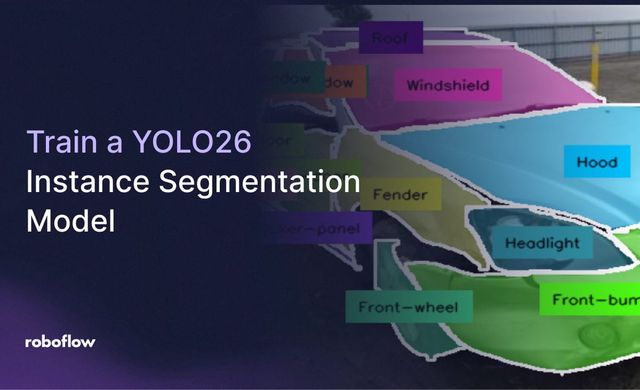
15 Jan 2026 • 5 min read Train a YOLO26 Instance Segmentation Model with Custom Data SUMMARY This tutorial walks through fine-tuning YOLO26 for instance segmentation on the Car Part Detection dataset from Roboflow Universe, using a Google Colab notebook with the Ultralytics library. Unlike object detection bounding boxes, instance segmentation identifies the exact pixels belonging to each object, which matters for applications like medical