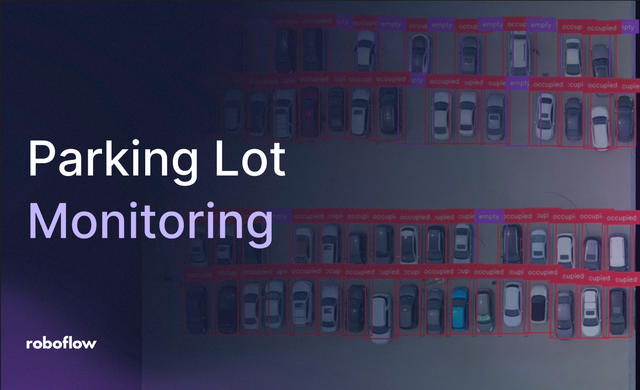
28 Aug 2026 • 10 min read How to Build a Parking Lot Monitoring System with Computer Vision In this guide, we show how to build a parking lot occupancy monitoring system with computer vision.
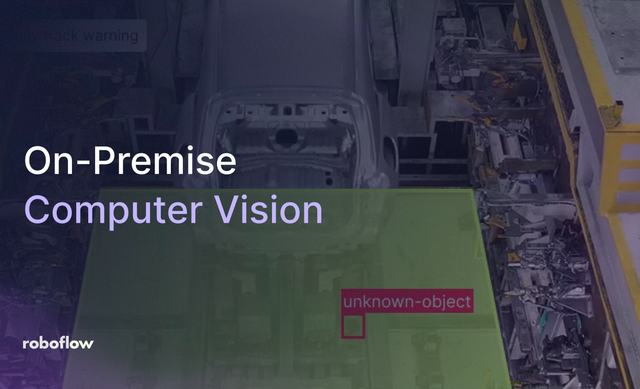
18 Aug 2026 • 15 min read On-Premise Computer Vision: Run Vision AI on Your Own Servers On-premise computer vision lets you run vision AI on your own servers, edge devices, or factory hardware. Learn how local inference works, which deployment fits, what hardware you need, how to set up Roboflow Inference, and how to manage models securely at scale.
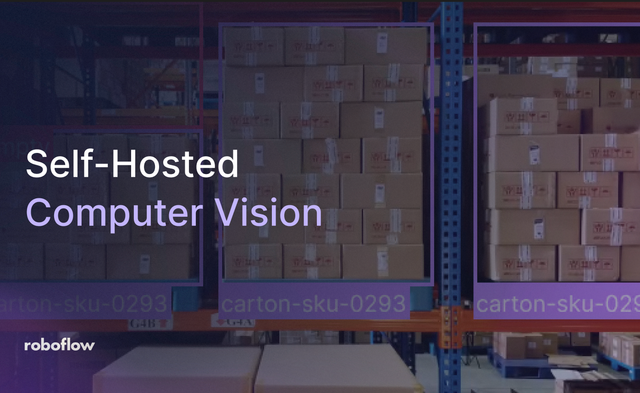
18 Aug 2026 • 12 min read Self-Hosted Computer Vision: Run Your Own Vision Stack with Roboflow Inference Learn how to deploy self-hosted computer vision models for privacy, low latency, and offline use. See how Roboflow Inference simplifies local deployment
4 Aug 2026 • 27 min read Zero-Shot vs. Fine-Tuned Models: When to Train Your Own Zero-shot vs fine-tuned models: prototype with SAM 3, auto-label your dataset, then train RF-DETR for the accuracy and speed production needs.
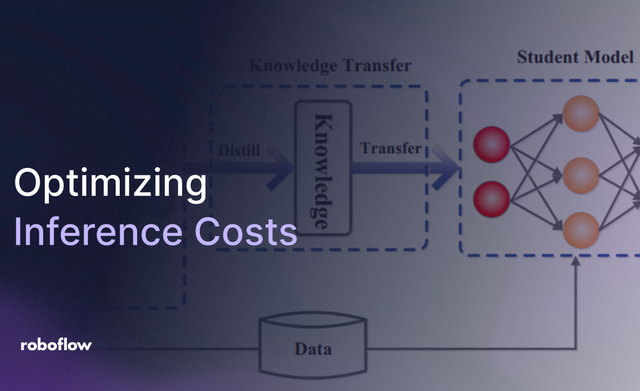
20 Jul 2026 • 13 min read Advanced Techniques for Optimizing AI Inference Costs In this guide, you will learn about advanced techniques that can help reduce AI inference costs across the complete computer vision pipeline.
16 Jul 2026 • 18 min read Roboflow Serverless Inference: A Thousand Models on a Shared GPU Fleet Most web services ingest kilobytes and emit the heavy bytes. Vision inference flips that, and breaks a few more production assumptions on the way. Here's the serverless architecture behind a thousand models on a shared GPU fleet.
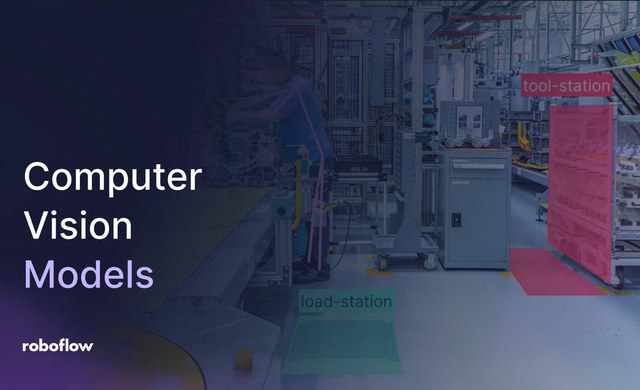
15 Jul 2026 • 21 min read Best Computer Vision Models in 2026: A Task-by-Task Guide Explore the best computer vision models in 2026 for object detection, segmentation, classification, keypoints, OCR, vision-language tasks, depth estimation, and tracking. Compare leading models, benchmarks, licensing, deployment options, and when to fine-tune on custom data using Roboflow tools.
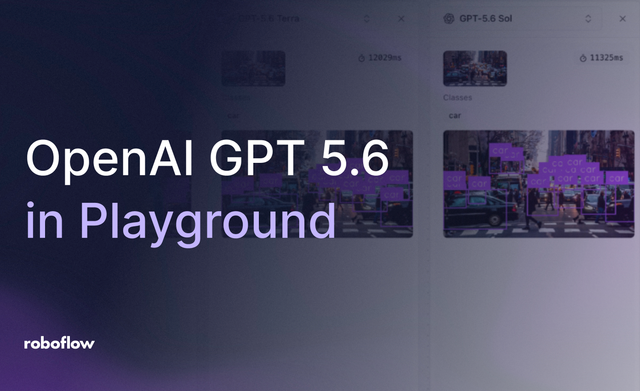
9 Jul 2026 • 3 min read OpenAI GPT-5.6 (Sol, Terra, and Luna) for Vision: Now in Roboflow Playground OpenAI's GPT-5.6 family (Sol, Terra, and Luna) is now in the Roboflow Playground, so you can test all three tiers against your own visual data and compare them side by side with other frontier models.
1 Jul 2026 • 12 min read Fastest Object Detection Models in 2026 Compare the fastest object detection models. Learn how to test models in Roboflow Workflows and use local Inference profiling to choose the best model for your data.
24 Jun 2026 • 3 min read Roboflow and Standard Bots Bring Custom Visual Intelligence to Every Robot Roboflow and Standard Bots are announcing a partnership to enable robots to see, understand, and act with visual intelligence.
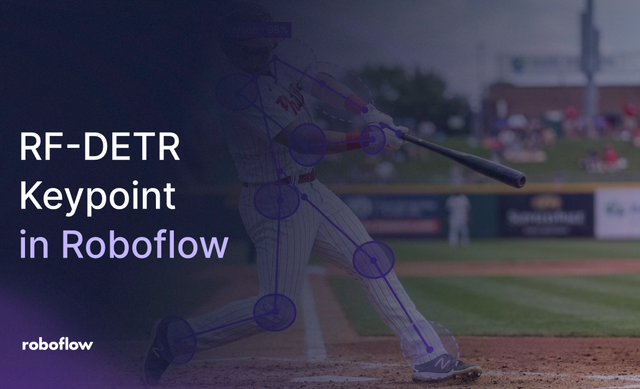
22 Jun 2026 • 4 min read Launch: RF-DETR Keypoint in Roboflow RF-DETR Keypoint beats YOLO26-pose on accuracy and speed, learns keypoint uncertainty, and is Apache 2.0. Label, train, and deploy in Roboflow.
11 Jun 2026 • 2 min read Launch: Claude Fable 5 available in Roboflow Claude Fable 5, Anthropic's most capable model, is now available in Roboflow Workflows and the Roboflow Playground.
9 Jun 2026 • 15 min read Best Vision Systems for Manufacturing Rule-based cameras flag good parts as bad and break when your line changes. See the best vision systems for manufacturing and what scales.
1 Jun 2026 • 7 min read How to Use Tiling During Inference Discover how image tiling improves small object detection. Learn to apply it during training and inference using Roboflow Workflows.
1 Jun 2026 • 12 min read How to Deploy Computer Vision Models Offline In this guide, we walk through how to deploy computer vision models offline using Roboflow Inference.
28 May 2026 • 5 min read What Is YOLO-StereoDepth? YOLO-StereoDepth brings stereo depth for robotics to the YOLO family in September 2026. See what we know and how to read metric depth today.
26 May 2026 • 15 min read Gemini Computer Vision Google's Gemini models bring computer vision capabilities and enables understanding images and video without fine-tuning. In this guide you will learn how to use latest Gemini models in Roboflow Playground and Workflows for computer vision tasks.
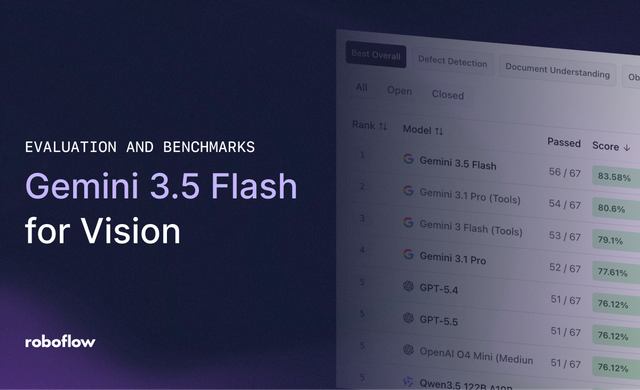
22 May 2026 • 6 min read Gemini 3.5 Flash for Vision: Evaluation and Benchmarks SUMMARY Gemini 3.5 Flash, released at Google I/O on May 19, 2026, currently tops the Roboflow Vision Evals leaderboard across 67 real vision prompts covering defect detection, document understanding, object counting, and spatial reasoning. It outperforms Gemini 3.1 Pro on counting and spatial tasks while running roughly
20 May 2026 • 3 min read Launch: 300+ OpenRouter models available in Roboflow SUMMARY Roboflow's OpenRouter integration adds a single Workflow block that routes to any of 300+ VLMs, including every major commercial model and a broad selection of open-source options, without requiring separate auth, request adapters, or retry logic for each provider. Practical patterns this enables inside Roboflow Workflows
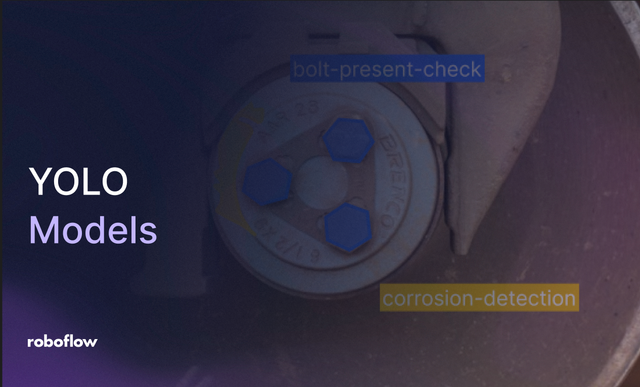
14 May 2026 • 10 min read What Is YOLO? The Guide to YOLO Models Learn about the history of the YOLO family of objec tdetection models, extensively used across a wide range of object detection tasks.
9 May 2026 • 12 min read Use Cases for Computer Vision in Healthcare The FDA has authorized 1,524 AI-enabled medical devices, and the market for vision in healthcare is growing 24% a year. Here are 9 ways hospitals use computer vision today, from pill counting to cancer screening, with tutorials to build each one.
7 May 2026 • 4 min read How to Store Computer Vision Model Predictions Store computer vision model predictions, images, and metadata in one place. See Roboflow Vision Events turn raw output into insight.
4 May 2026 • 7 min read Vision Token Counts: What does it cost to process an image with a frontier vision model? Understand the cost, per-provider tokenization rules, and a comparison across image sizes for Claude, GPT, and Gemini.
28 Apr 2026 • 7 min read Top Open-Source Object Tracking Tools Compare the top open source object tracking tools: ByteTrack, BoT-SORT, OC-SORT, DeepSORT, and more, with how to choose and no-code options.