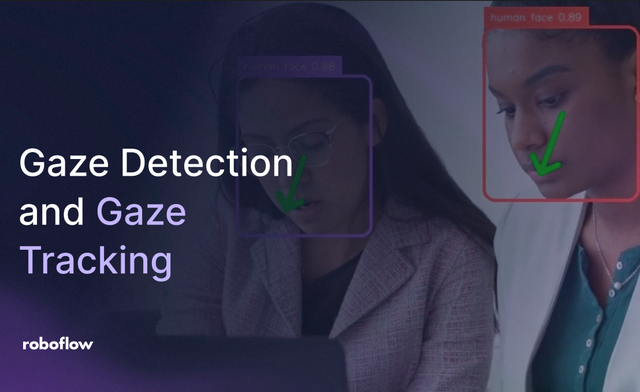
8 Sep 2026 • 22 min read Gaze Detection and Gaze Tracking Explained Gaze tracking explained, plus a working pipeline: detect faces with SAM 3, track them with OC-SORT, and estimate gaze with L2CS-Net in Roboflow.
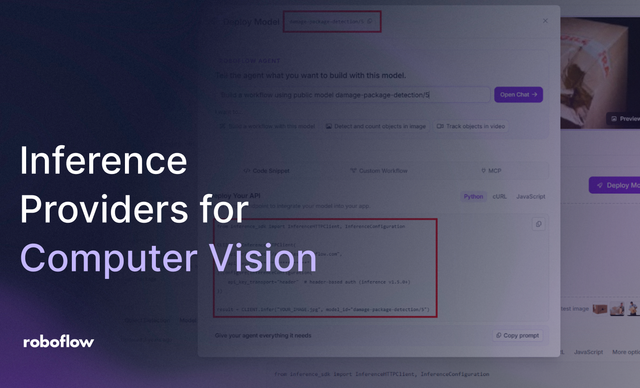
3 Aug 2026 • 18 min read Inference Providers for Computer Vision Models Compare inference providers for computer vision models and learn how to deploy custom models with Roboflow. Explore Serverless Cloud API, custom weight support, Workflows, pricing, deployment options, and a step-by-step path from training to cloud, dedicated, or edge inference.
16 Jul 2026 • 18 min read Roboflow Serverless Inference: A Thousand Models on a Shared GPU Fleet Most web services ingest kilobytes and emit the heavy bytes. Vision inference flips that, and breaks a few more production assumptions on the way. Here's the serverless architecture behind a thousand models on a shared GPU fleet.
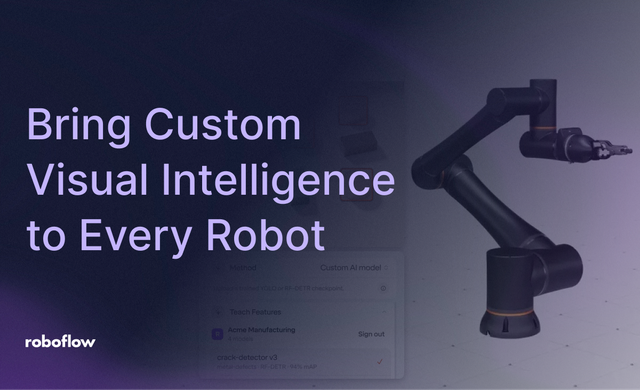
24 Jun 2026 • 3 min read Roboflow and Standard Bots Bring Custom Visual Intelligence to Every Robot Roboflow and Standard Bots are announcing a partnership to enable robots to see, understand, and act with visual intelligence.
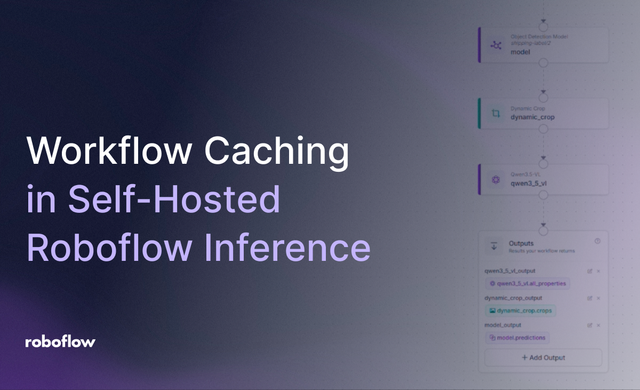
18 Jun 2026 • 6 min read Workflow Caching in Self-Hosted Roboflow Inference Learn how self-hosted inference caching works in Roboflow Workflows and how to force a deployment refresh.
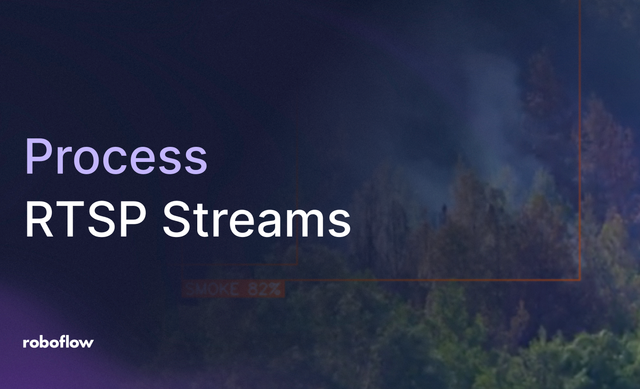
28 May 2026 • 10 min read Process RTSP Streams for Real-Time Video Analytics Ingest RTSP streams, handle frame buffering, and run wildfire smoke detection on the Roboflow Inference Docker container.
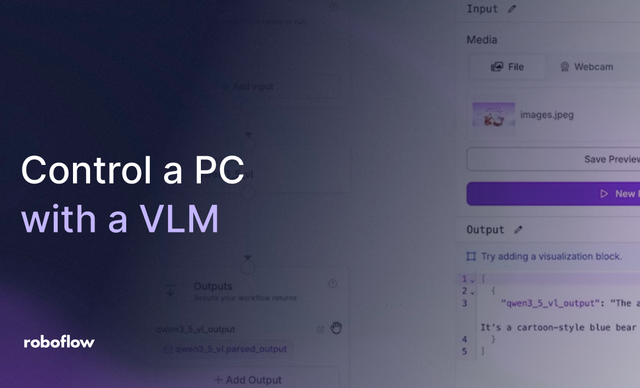
11 May 2026 • 4 min read How to Use a VLM to Control a PC Learn how to use a VLM to control a PC. See how a model can read your screen and click for you. See why it works and watch Qwen 3.5 do it live.
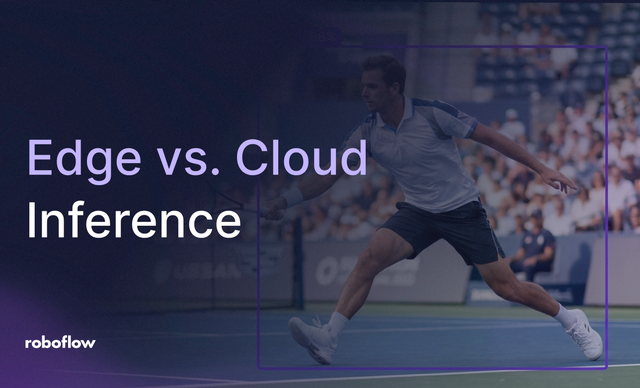
6 May 2026 • 7 min read Edge vs. Cloud Inference with Roboflow Should you deploy computer vision models to the edge or the cloud? Compare latency, costs, and connectivity to choose the best inference architecture.
16 Apr 2026 • 5 min read Serverless GPU Inference Cost Comparison: Roboflow, GCP, AWS, Azure SUMMARY Serving a custom RF-DETR XL model on serverless GPU infrastructure produces dramatically different monthly costs depending on the provider and traffic pattern, so this post benchmarks Roboflow Serverless, GCP Cloud Run, AWS SageMaker, and Azure Serverless GPU across three workloads: continuous inference at one request per 10 seconds,
16 Mar 2026 • 5 min read Which is the Best Coding Agent for Vision tasks? SUMMARY This benchmark pits four coding agents (Claude Code with Opus 4.6, Cursor with Composer 2, Gemini CLI with Gemini 3.1 Pro, and Codex with GPT 5.4) against five computer vision tasks including bird counting with SAM 3, car counting in video and RTSP streams, avocado detection,
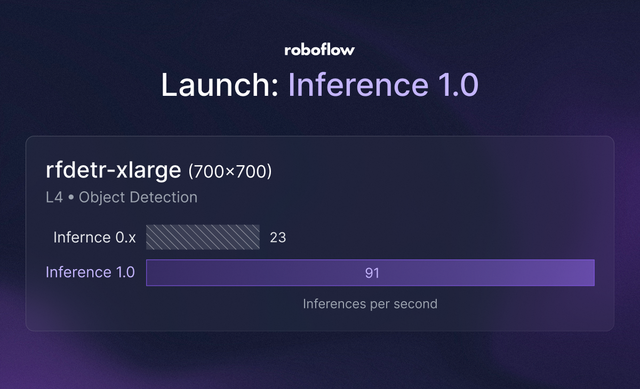
12 Mar 2026 • 4 min read Inference 1.0: Foundational Infrastructure for Visual Understanding SUMMARY Roboflow Inference 1.0 is a modular, multi-backend execution engine built to run vision models at enterprise scale across cloud and edge hardware. The 1.0 release adds automatic backend selection across ONNX, PyTorch, and TensorRT, so the server picks the best runtime for the underlying hardware without
2 Mar 2026 • 6 min read Inference as a Service: How Roboflow Makes Vision AI Production-Ready This guide explores how to abstract away the complexities of GPU orchestration and hardware allocation. Roboflow offers a production-grade API with built-in active learning, model chaining, and auto-scaling to turn your vision models into real-world solutions.
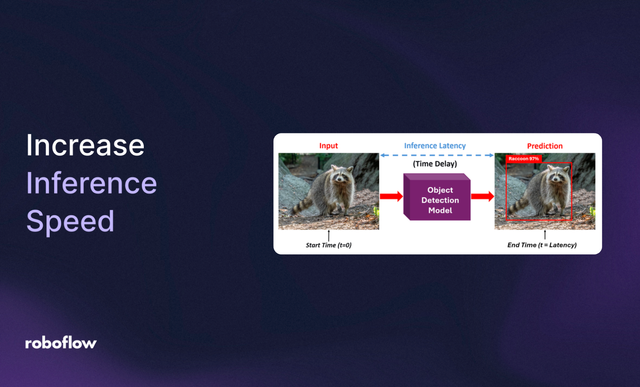
27 Feb 2026 • 14 min read How to Increase Inference Speed for Computer Vision Models Struggling with low FPS in your computer vision model? This guide explains how to move from single-digit performance to real-time deployment using smarter preprocessing, Nano-scale models like RF-DETR, GPU acceleration, TensorRT optimization, and Roboflow Inference pipelines for maximum throughput.
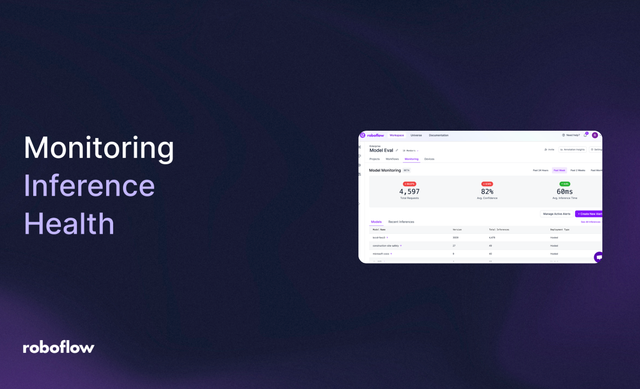
18 Feb 2026 • 7 min read How Do I Monitor Inference Health? Inference health monitoring is necessary to keep computer vision systems reliable in production. This guide explains key signals like latency, uptime, drift, and confidence trends, and shows how Roboflow helps teams track, diagnose, and improve real-world model performance.
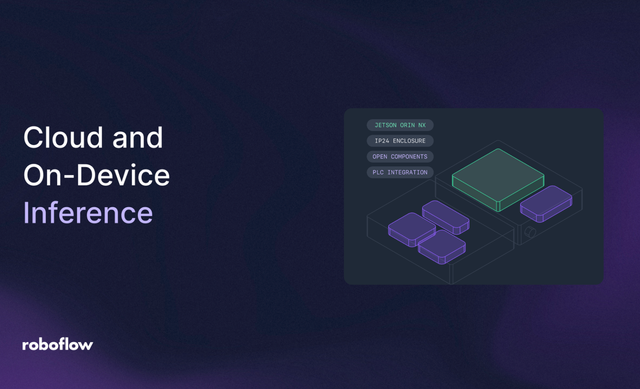
16 Feb 2026 • 9 min read Comparing Cloud and On-Device Inference for Computer Vision Models Learn how to architect a unified vision pipeline that leverages the speed of edge inference for real-time action while escalating high-complexity tasks to frontier cloud models.
15 Jan 2026 • 4 min read Launch: Train and Deploy YOLO26 with Roboflow SUMMARY Roboflow platform support for YOLO26 covers the full workflow from labeling and training to deployment. The model's edge-optimized architecture, which removes Non-Maximum Suppression for end-to-end predictions and introduces the MuSGD optimizer, can be deployed via Roboflow Inference on CPU or GPU hardware. Dataset
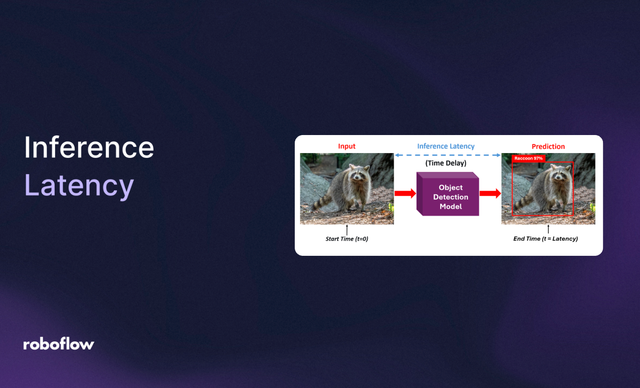
13 Nov 2025 • 10 min read Inference Latency Learn about inference latency, why it matters, and how to optimize every stage of the pipeline to build reliable, real-time vision systems.
13 Dec 2024 • 6 min read Putting the New M4 Macs to the Test Apple's new M4 chips deliver massive performance gains in computer vision, with up to 3x the speed of the M1 Max. Benchmarks using Roboflow's tools highlight the M4's dominance in real-time object detection and segmentation, driven by SME hardware enhancements. The future of AI just got faster!