21 Jan 2026 • 6 min read How to Use Qwen3-VL in Roboflow In this guide, build an image-understanding workflow in Roboflow that turns Qwen3-VL into a production-ready vision agent you can run via API or on your own GPU.
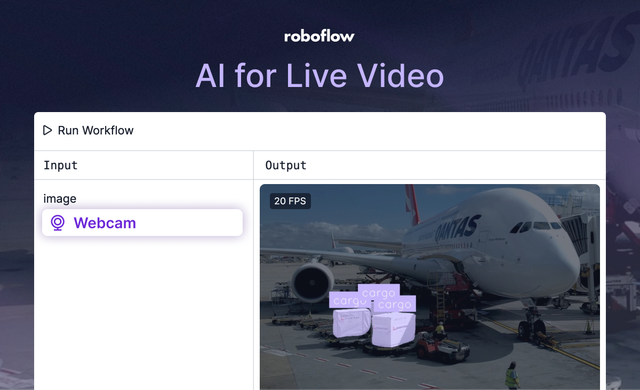
22 Dec 2025 • 4 min read AI for Live Video: Introducing the Serverless Streaming API Today we are announcing the Serverless Video Streaming API, the simplest way to run AI on live video streams. Previously, using AI to understand live video streams meant managing complex cloud infrastructure or configuring local hardware. The Serverless Video Streaming API removes those barriers, allowing you to run powerful vision
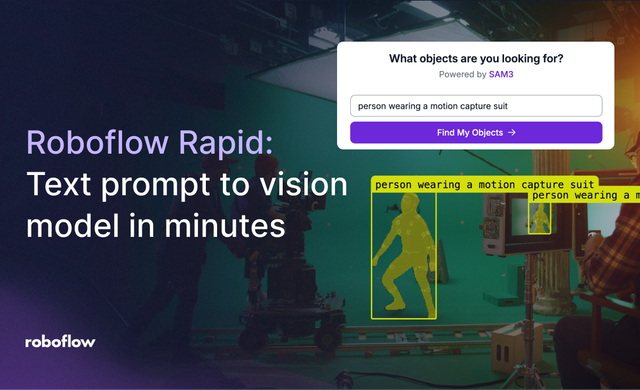
9 Dec 2025 • 4 min read Introducing Roboflow Rapid: Text prompt to vision model in minutes For most of computer vision's history, training has been extremely challenging. Going from an idea to a deployed application meant spending weeks labeling hundreds or thousands of images by hand just to see if a concept would work. Now the era of manual labeling is ending. Today, we
19 Nov 2025 • 5 min read Launch: Use Segment Anything 3 (SAM 3) with Roboflow Today, we are introducing new tools powered by Segment Anything 3 (SAM 3) that significantly change how people build computer vision applications. SAM 3 is a powerful vision foundation model that detects, segments, and tracks objects in images and videos based on prompts. See our detailed SAM 3 model overview
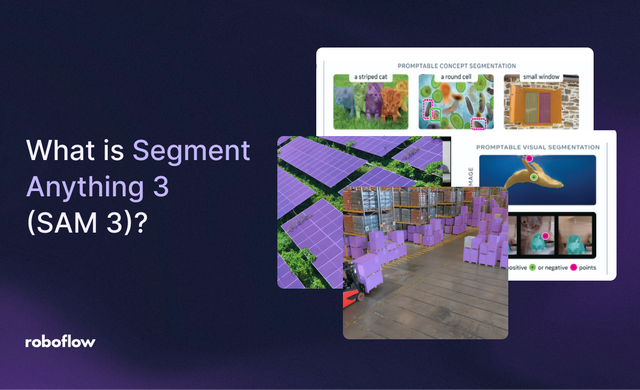
19 Nov 2025 • 12 min read SAM 3: Segment Anything with Concepts Learn what SAM 3 is, what you can do with the model, see examples of SAM 3 in use, and learn how you can use the model.
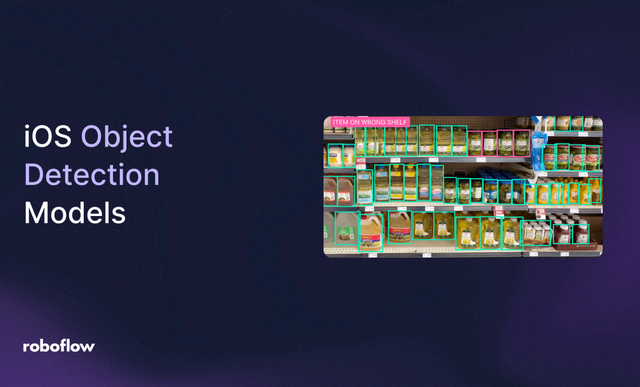
10 Nov 2025 • 9 min read Best iOS Object Detection Models Explore the best iOS object detection models: RF-DETR, YOLO11, and MobileNet SSD. Learn how to train, quantize, and deploy vision AI on iOS.
4 Aug 2025 • 8 min read How to Create a YOLOv11 Android App Adding vision AI capabilities to your Android app is possible by deploying a custom YOLOv11 model on your device. Object detection models allow you to create lots of useful features like counting, measurement, reading text, and classification. In this guide, you'll learn how to create a custom YOLOv11
1 Aug 2025 • 4 min read Launch: Verified Model Metrics Selecting the right computer vision model for production starts with accurately measuring and comparing model performance. Evaluation metrics quantify a model’s capabilities, helping teams make informed decisions and choose models suited for real-world use. Among the many metrics available, Mean Average Precision (mAP) is a leading metric because it
25 Jul 2025 • 9 min read How to Build an iOS App with Visual AI Capabilities In this guide, we’ll walk through using a custom object detection model tailored to identify glasses and show you how to seamlessly integrate it into an iOS app for instant live detection — all with minimal latency and maximum convenience. 0:00 /0:13 1× Millions of people rely on
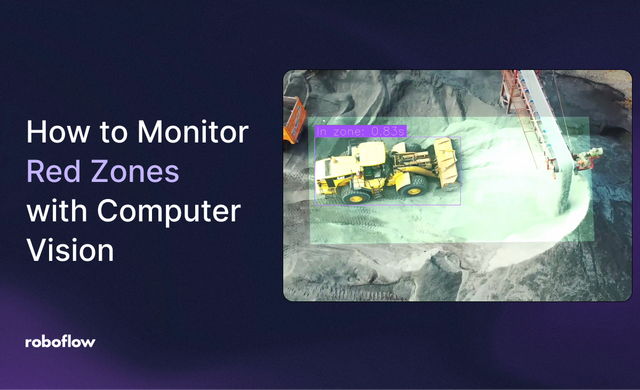
10 Apr 2025 • 6 min read How to Monitor Red Zones with Computer Vision Learn how to monitor red zones for safety compliance using computer vision.
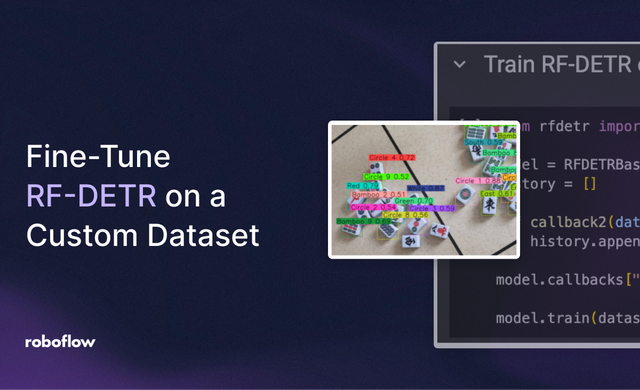
20 Mar 2025 • 7 min read How to Train RF-DETR on a Custom Dataset Learn how to train an RF-DETR model on a custom dataset.
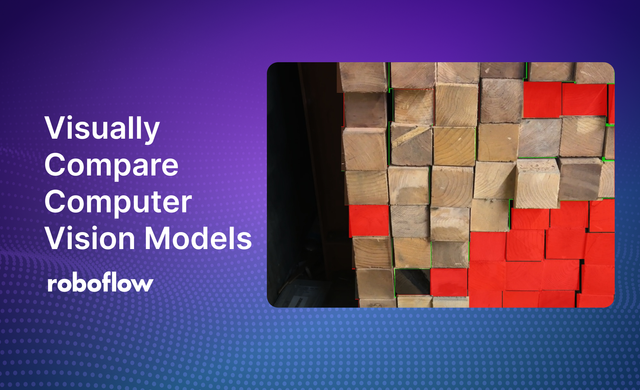
24 Jan 2025 • 4 min read How to Visually Compare Computer Vision Models Learn how to compare two computer vision models visually using Roboflow Workflows.
15 Jan 2025 • 3 min read How to Deploy Computer Vision Models to a Raspberry Pi Learn how to deploy computer vision models to a Raspberry Pi.
3 Jan 2025 • 7 min read Deploying Machine Learning Models with PyTorch, gRPC, and asyncio Today we're going to see how to deploy a machine-learning model behind gRPC service running via asyncio. gRPC promises to be faster, more scalable, and more optimized than HTTP v1. gRPC is supported in all major programming languages and will create types hints, client, and server code for
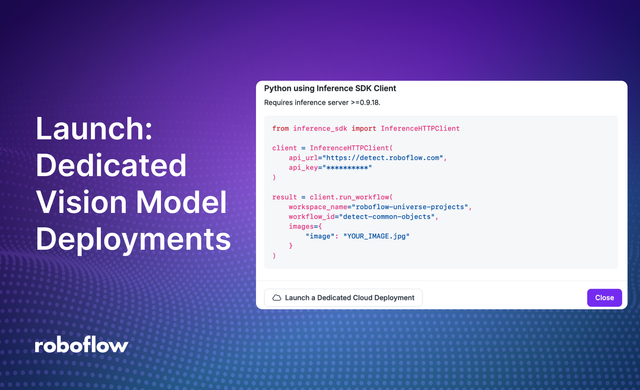
13 Dec 2024 • 3 min read Launch: Dedicated Deployments When you deploy a computer vision model, you may want to have a dedicated server, or several servers, to which you can route requests to your vision model. This is ideal for workflows where you are processing images from a client (i.e. a web application), recorded videos, and more.
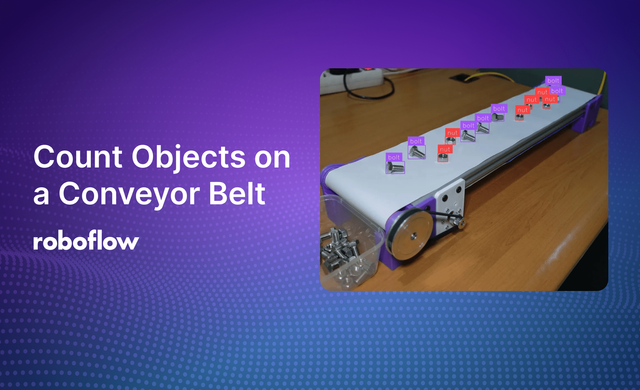
12 Dec 2024 • 4 min read Count Objects on a Conveyor Belt Using Computer Vision In many manufacturing environments, conveyor belts are used for transporting objects, especially small components such as bolts, nuts, or other fasteners through various stages of production. Being able to reliably count these objects in real-time improves inventory management, quality assurance, and overall efficiency. Introduction In this guide, we’ll walk
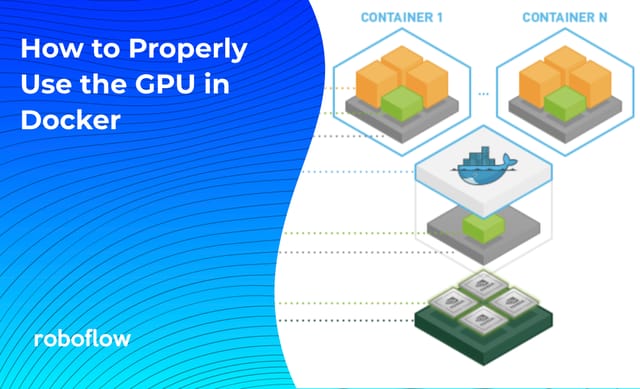
22 Oct 2024 • 10 min read How to Use Your GPU in a Docker Container Learn how to use your GPU in a Docker container and measure upir application's performance.
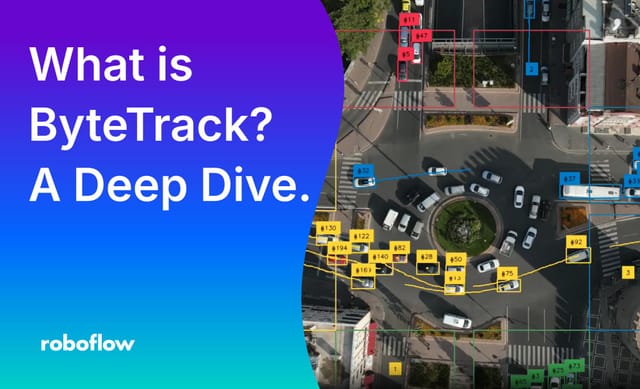
21 Aug 2024 • 7 min read What is ByteTrack? A Deep Dive. Introduction Detecting and tracking multiple objects in a video in real-time can be tricky. Luckily, the computer vision community has developed object-tracking algorithms to tackle this task over the years. These algorithms aim to identify and follow objects as they move through a video. A great example of these algorithms
12 Aug 2024 • 5 min read How to Deploy Hugging Face Models with Roboflow Hugging Face is an online community with AI models available for download. You can deploy select computer vision models hosted on Hugging Face with Roboflow Inference, a high-performance inference server for computer vision applications. This guide will show you how you can download models from Hugging Face and deploy them
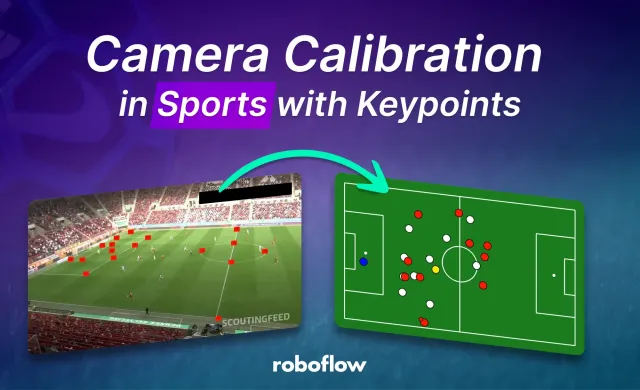
8 Aug 2024 • 7 min read Camera Calibration in Sports with Keypoints Camera calibration is important to accurate vision AI systems that analyse sports. It allows the mapping of their movement on a video frame to real movement on the field, and thus the tracking of the distance they cover, the direction, and the speed at which they move. Homography is commonly
7 Aug 2024 • 8 min read How to Extract Text From Images Introduction to Text Extraction Manually working with data in JPG, PNG, or PDF formats can be a hassle, as it takes a lot of time to analyze and these files can’t be managed easily in a programmatic way. We can use tools, either online or offline, to convert images
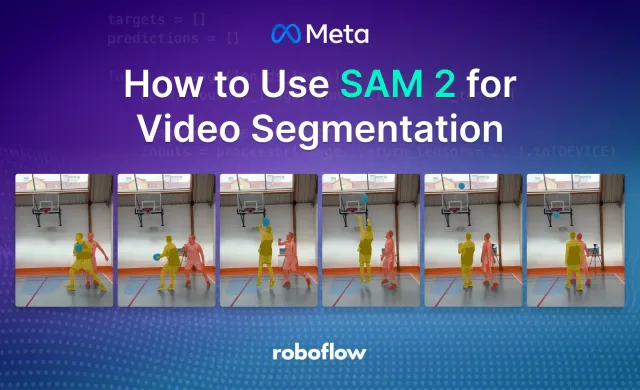
1 Aug 2024 • 7 min read How to Use SAM 2 for Video Segmentation Segment Anything Model 2 (SAM 2) is a unified video and image segmentation model. Video segmentation presents unique challenges compared to image segmentation. Object motion, deformation, occlusion, lighting changes, and other factors can vary dramatically from frame to frame. Videos are often lower quality than images due to camera motion,
30 Jul 2024 • 7 min read What is Segment Anything 2 (SAM 2)? Learn about Meta AI's new Segment Anything 2 model and how you can use it for image and grounded image segmentation.
19 Jul 2024 • 8 min read People Counting Using Computer Vision Introduction Counting and keeping track of a large number of people entering and exiting an event can be challenging, especially when security is a priority. Traditional methods of monitoring people make it difficult for security officials to keep track of everyone in real-time. However, advancements in AI technologies like computer