6 Jul 2022 • 2 min read Roboflow Changelog: May & June 2022 Each month, we share a recap of product and company updates. Here's what's new for May and June in 2022!
1 Jul 2022 • 16 min read How to Train a YOLOv6 Model on a Custom Dataset Learn how to train a YOLOv6 object detection model on a custom dataset.
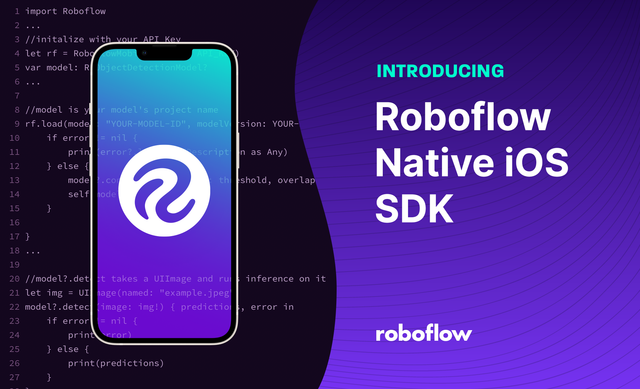
30 Jun 2022 • 3 min read Launch: Roboflow Native iOS SDK Constrained bandwith? Left without the option to extend production data beyond your local network or corporate firewall? In need of real-time inference speeds on the edge? The Roboflow Mobile iOS SDK is a great option if you are developing an iOS application.
29 Jun 2022 • 5 min read Using Gaming Datasets for Game Automation with Computer Vision SUMMARY This tutorial walks through building a computer vision model to detect Minecraft tree trunks using screenshots collected across multiple in-game biomes, annotated and trained via Roboflow. The resulting model is deployed through a Python inference script that reads frames from an OBS Studio virtual webcam, enabling real-time
29 Jun 2022 • 1 min read What is TensorFlow? Learn what TensorFlow is and how it can be used for computer vision.
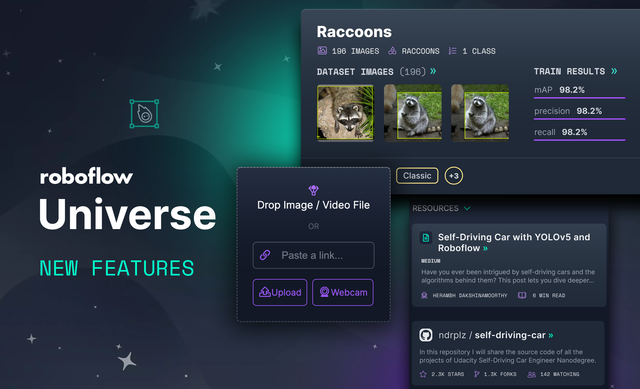
28 Jun 2022 • 4 min read Open source datasets and pre-trained models for computer vision SUMMARY Roboflow Universe grew from 50 open-source datasets at launch in August 2021 to over 90,000 datasets with 66 million labeled images and more than 7,000 pre-trained models available via API, covering object detection, segmentation, and image recognition across industries. Pre-trained models on Universe can
24 Jun 2022 • 4 min read CVPR 2022 - Best Papers and Highlights In this post, we take the opportunity to reflect on the computer vision research landscape at CVPR 2022 and highlight our favorite research papers and themes.
24 Jun 2022 • 2 min read What is cuDNN? SUMMARY cuDNN (CUDA Deep Neural Network library) is NVIDIA's GPU-accelerated library of low-level primitives, such as convolution and pooling, that frameworks like PyTorch and TensorFlow call internally to run deep learning workloads on NVIDIA GPUs. It sits on top of CUDA, which handles general-purpose GPU
22 Jun 2022 • 3 min read Launch: Label Only Role-based Access Control SUMMARY Roboflow Annotate now supports role-based access control with a dedicated Labeler role, letting teams scale annotation work outside their organization without exposing project data. Labelers see only the images assigned to them in a Job, while Reviewers approve or reject submitted annotations and return failed batches for edits.
15 Jun 2022 • 9 min read Train and Deploy YOLOS Transformer On a Custom Dataset In this post, we showcase training and deploying YOLOS end to end, from labeling your data, to training your model, to deploying your model on AWS for inference.
8 Jun 2022 • 3 min read Roboflow Now Available in the Microsoft Azure Marketplace SUMMARY Roboflow is now listed in the Microsoft Azure Marketplace, giving Azure customers a direct path to purchase and integrate Roboflow's computer vision platform alongside their existing cloud infrastructure. Teams already storing images and video in Azure Blob Storage can connect that data to Roboflow's annotation,
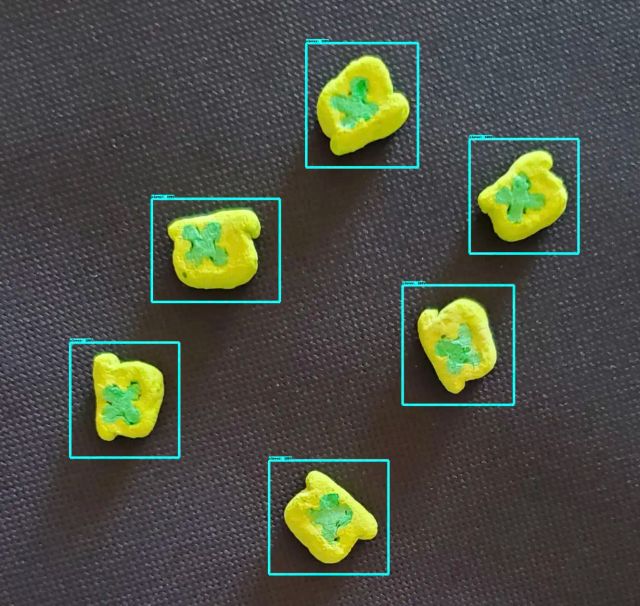
6 Jun 2022 • 8 min read Food Manufacturing Defect Detection with Lucky Charms SUMMARY This tutorial builds a computer vision system to detect and classify the eight types of Lucky Charms marshmallows (marbits) as a practical stand-in for food manufacturing quality control. Dataset labeling and preprocessing happen in Roboflow, and the post covers two training paths: Roboflow Train for a one-click
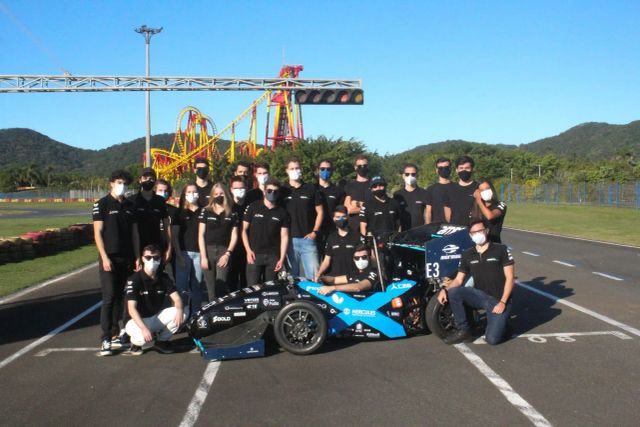
6 Jun 2022 • 6 min read Autonomous Vehicle Object Detection SUMMARY Ampera Racing, a student engineering team from UFSC in Brazil, built a low-cost autonomous vehicle pipeline using computer vision as the core perception layer, with RF-DETR handling cone detection for the Formula Student Driverless competition. The architecture covers five subsystems: environment perception, mapping, motion planning, lateral control,
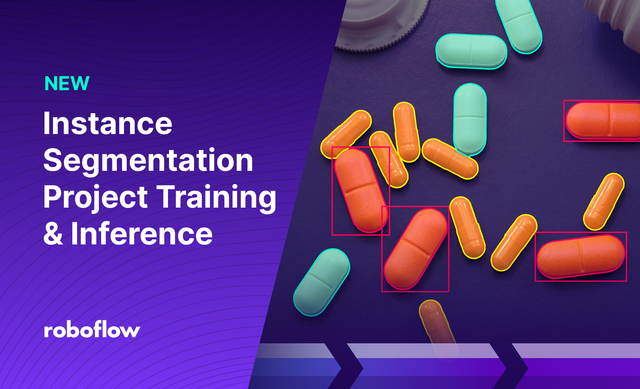
19 May 2022 • 2 min read Launch: Instance Segmentation Project Training and Inference SUMMARY Roboflow now supports instance segmentation project training and inference natively on the platform, letting teams train directly from a pre-trained COCO checkpoint without writing training code. Instance segmentation produces per-object outlines rather than just bounding boxes, making it the right choice when downstream tasks require measuring object
19 May 2022 • 4 min read Launch: Roboflow OAK pip package roboflowoak pip package lets you natively interface with your Roboflow workspace through Python scripts and deploy to an OAK device.
17 May 2022 • 4 min read Boxing Punch Detection Using Computer Vision One of the best parts about joining Roboflow is doing a computer vision project in your first 2 weeks. As someone who loves to workout, I wanted to focus my project on a fitness related use case. I often mix boxing workouts into my routine, and thought it would be
16 May 2022 • 9 min read Recipe for a Company On-site Creating a magnetic environment for exceptional talent is one of Roboflow’s top priorities. We want our remote-first culture to be the best option for our team, not a necessity because of the pandemic or anything else. We choose to be remote. It works better for us than being
11 May 2022 • 3 min read How to Train a YOLOv5 Oriented Bounding Box Model Learn how to train a YOLOv5 Oriented Bounding Box (OBB) object detection model.
11 May 2022 • 5 min read Roboflow’s Python Pip Package For Computer Vision Regardless of whether your project is a new product line, a new industrial production system, a research project, or a personal one to help you learn what computer vision is all about, you'll want to add "pip install roboflow" to your code - and here's why.
6 May 2022 • 2 min read Roboflow Changelog: April 2022 April showers brings May flowers, and here's a bouquet of flower datasets from Roboflow Universe you can use today!
5 May 2022 • 3 min read Cinco de Mayo, Beer and Taco Dataset with Multi-Label Classification SUMMARY Multi-label classification lets a single model predict multiple classes per image simultaneously, making it a natural fit for scenes where counting or locating objects precisely is less important than knowing what is present. This post builds a taco and beer classifier by merging several Roboflow Universe datasets (including
3 May 2022 • 3 min read Machine vision applications with wearable devices SUMMARY XR Tech, a UK industrial extended reality provider, built a wearable camera safety system by training computer vision models on Roboflow to detect PPE compliance and physical hazards such as loose rubble and heat exhausts on live body-cam streams. The team followed a structured data hygiene process: starting
20 Apr 2022 • 1 min read Art Recognition with a Computer Vision Model Learn how to use computer vision to classify art styles.
13 Apr 2022 • 6 min read How to Train Detectron2 for Custom Instance Segmentation A walk through on how to train Detectron2 to segment your custom objects from any image by providing our model with example training data.