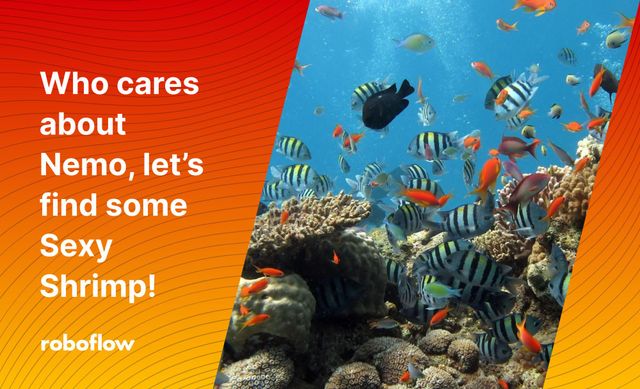
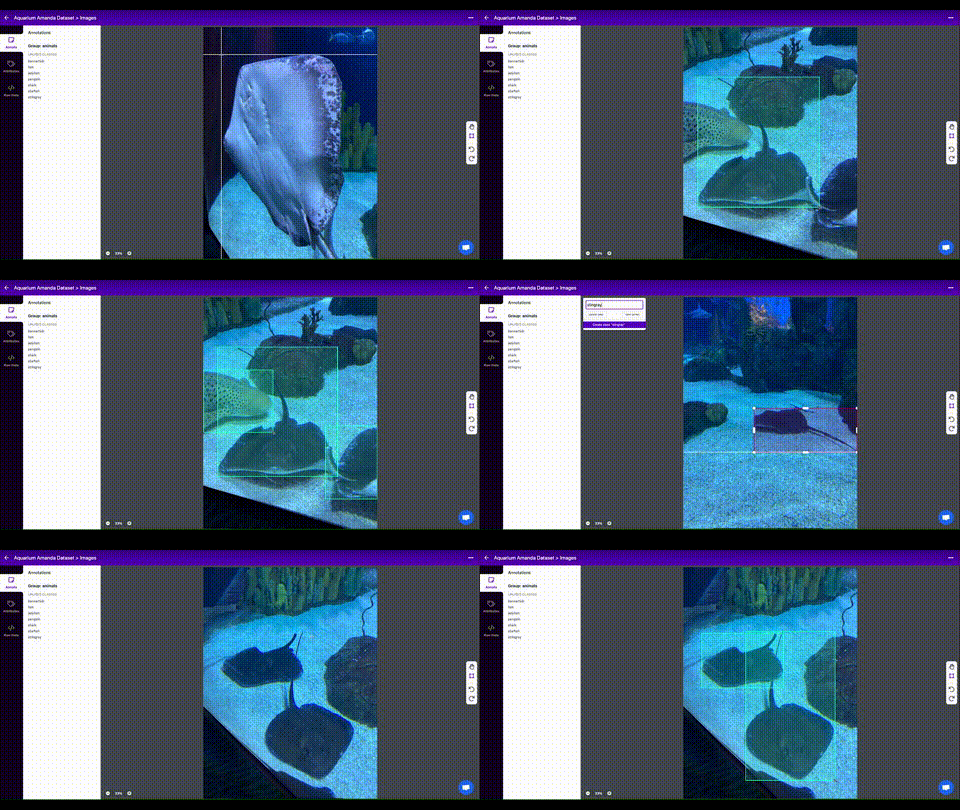
7 Dec 2021 • 7 min read Who cares about Nemo, let's find some Sexy Shrimp! Creating a computer vision model with Roboflow to detect sexy shrimp.
29 Aug 2021 • 1 min read Live Coding: Blackjack Basic Strategy SUMMARY This live coding session builds a computer vision web app that reads playing cards from a webcam and displays real-time blackjack basic strategy recommendations. Starting from boilerplate sample code, the session uses a playing cards object detection model from Roboflow Universe and produces a working app in about
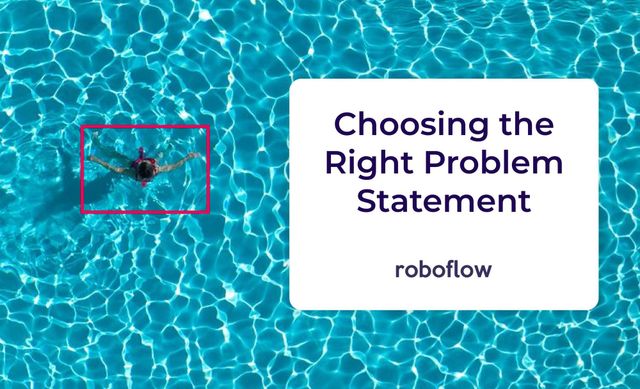
28 Jun 2021 • 3 min read Choosing the Right Problem Statement SUMMARY Before picking a model or sourcing images, defining a well-scoped problem statement is the step that determines whether a computer vision project succeeds. A good problem statement is specific (naming exact objects to detect), achievable (accounting for annotation feasibility and domain expertise), and measurable (informing deployment strategy and
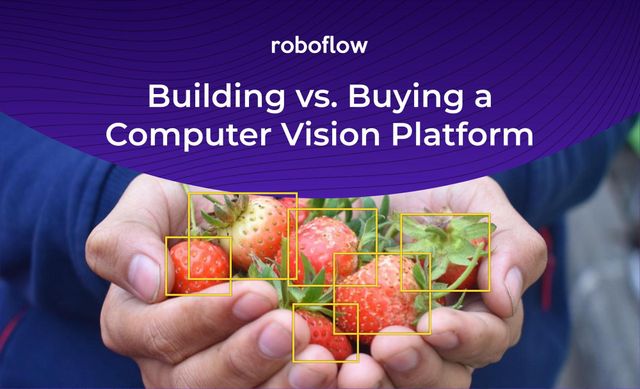
14 Jun 2021 • 7 min read Building vs. Buying a Computer Vision Platform SUMMARY Building a computer vision pipeline in-house requires stitching together image upload, annotation, dataset versioning, training, deployment, and active learning, and the result is typically fragile, hard to maintain, and difficult to debug when components break. This post examines seven recurring problems teams encounter when building their own infrastructure,
30 May 2021 • 6 min read What Does "End to End" Really Mean? SUMMARY Building a working computer vision model once required stitching together custom pipelines, cloud services, and ML expertise. Roboflow closes that loop by covering every stage from raw image upload through annotation, dataset versioning, model training, and deployment to a hosted API endpoint, then feeds inference results back as training
22 Mar 2021 • 2 min read Video Inference with Roboflow SUMMARY Running a Roboflow model on video works by splitting the footage into individual frames, sending each frame through the model for predictions, then stitching the annotated frames back into a video. Roboflow provides an open source shell script that handles all three steps, so you can visualize detection output
21 Mar 2021 • 4 min read Danger Monitoring for Cyclists using Raspberry Pi and Object Detection SUMMARY This project builds a low-cost cyclist danger monitor using a Raspberry Pi 4, a Google Coral TPU stick for faster inference, and an LED traffic light that warns the rider when cars or bicycles are detected in proximity. The model was trained on three datasets totaling over 6,
1 Mar 2021 • 3 min read 5 Emerging Trends in Computer Vision Applications from OpenCV's AI Competition SUMMARY Reviewing over 200 project proposals submitted to the 2021 OpenCV AI Competition, five application patterns stand out across the more than 1,200 competing teams: assisting the visually impaired with spatial awareness, improving workplace safety by identifying hazardous zones, monitoring COVID protocol compliance, and tracking animal health and conservation
15 Dec 2020 • 6 min read How to Train Scaled-YOLOv4 to Detect Custom Objects Object detection technology advances with the release of Scaled-YOLOv4. This blog is written to help you apply Scaled-YOLOv4 to your custom object detection task, to detect any object in the world, given the right training data.
8 Dec 2020 • 2 min read Introducing Roboflow Annotate SUMMARY Roboflow Annotate is a self-serve image annotation tool built directly into the Roboflow platform, removing the friction of managing a separate labeling tool outside your pipeline. The integrated design supports team collaboration from a single source of truth and makes it straightforward to jump in and out of
22 Aug 2020 • 8 min read How to Train a Custom Mobile Object Detection Model (with YOLOv4 Tiny and TensorFlow Lite) Learn how to train a custom mobile object detection model with YOLOv4 tiny and TensorFlow Lite.
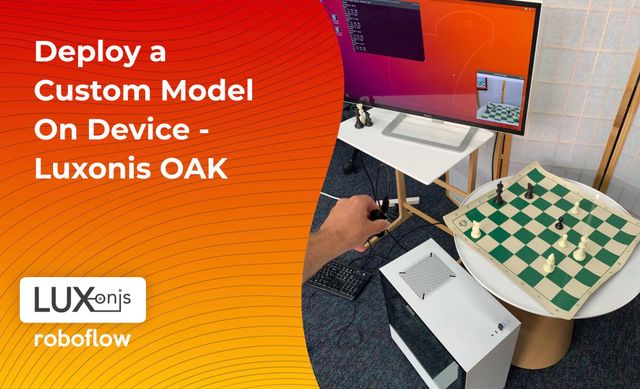
12 Aug 2020 • 14 min read Deploy A Custom Model to the Luxonis OAK - A Quickstart Guide This guide will take you the long distance from unlabeled images to a working computer vision model deployed and inferencing live at 15FPS on the affordable and scalable Luxonis OpenCV AI Kit (OAK) device.
28 Jul 2020 • 14 min read Benchmarking the Major Cloud Vision AutoML Tools Until now, there has been little independent research published on the performance of AutoML tools - (both relative to each other and against state of the art open source models)
5 Jul 2020 • 1 min read Roboflow vs Scale SUMMARY Roboflow and Scale serve different stages of the computer vision pipeline: Scale and similar services (LabelBox, SuperAnnotate, SageMaker Ground Truth) handle outsourced annotation, while Roboflow takes over after labeling to manage preprocessing, augmentation, dataset versioning, and training integrations. Roboflow imports annotations directly from most of these services, and its