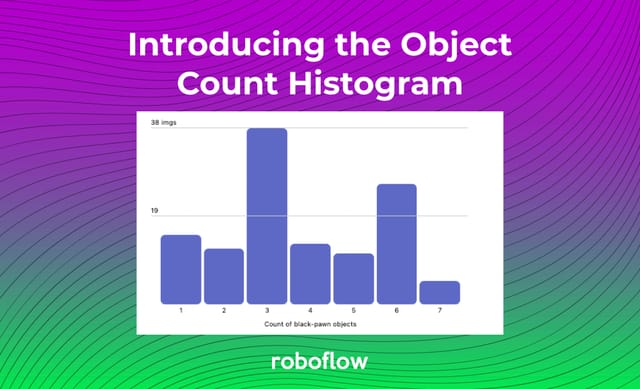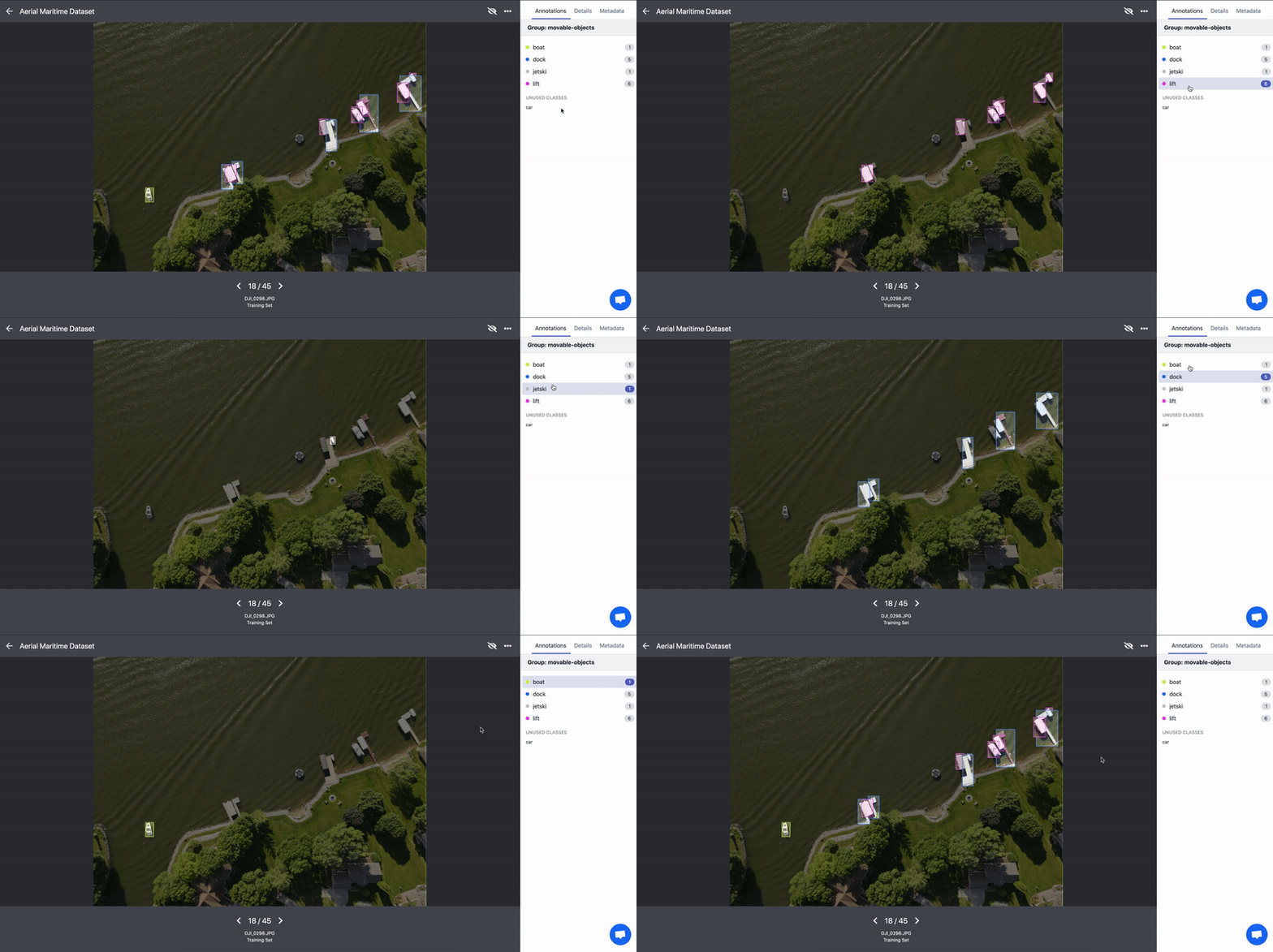
4 Jan 2021 • 2 min read Introducing the Object Count Histogram We are excited to announce the introduction of object count histograms, now available in the Roboflow dataset health check.
3 Jan 2021 • 2 min read Roboflow Changelog: January 2021 Welcome to our monthly changelog where we catalog our recent feature additions and improvements. If you missed it, you can find last month's changelog here. This month we launched Roboflow Annotate, an integrated image annotation tool included in all Roboflow plans. In the first few weeks, over 1500
28 Dec 2020 • 2 min read Get a Hosted API for your Object Detection Model Roboflow provides tools for labeling, organizing, and training a computer vision model. Once you finish running one of the Jupyter notebooks from our Computer Vision tutorials you can download a weights file optimized for making predictions on your custom dataset. The Current State of Affairs But what next? How do
8 Dec 2020 • 2 min read Introducing Roboflow Annotate Since we launched Roboflow in early 2020, our vision has always been to improve and streamline the workflow of computer vision projects so that developers can focus on the parts of their project that are unique, not on reinventing the wheel. But there's been one part of the
6 Dec 2020 • 1 min read Share Your Datasets with the Computer Vision Community Computer vision problems start with finding high quality image datasets. Fortunately, access to common image data is increasingly easier. Datasets like Microsoft's COCO dataset and the Pascal VOC dataset provide a standard for common objects and measuring the efficacy of state-of-the-art computer vision models (like Scaled-YOLOv4, PP-YOLO, YOLOv4,
4 Dec 2020 • 1 min read Roboflow Changelog: December 2020 Welcome to the first of our monthly changelogs, where we will be cataloging our recent feature additions and improvements. Roboflow Organize * Added ability to rebalance train/test split * Clarified pro plan features in-app * Sped up thumbnail generation * Added image upload by URL to the upload API * Paginated the image listing
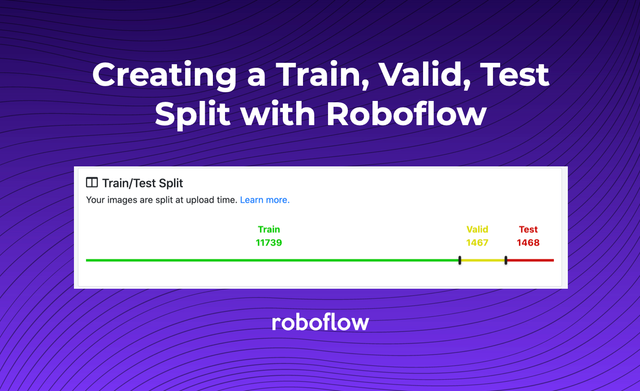
20 Nov 2020 • 2 min read Revamping Train, Validation, Test, Split Management Splitting data into train, validation, and test splits is essential to building good computer vision models. Today, we are announcing in-app changes to Roboflow that make it even easier to manage your train test splits as you are working through the computer vision workflow.
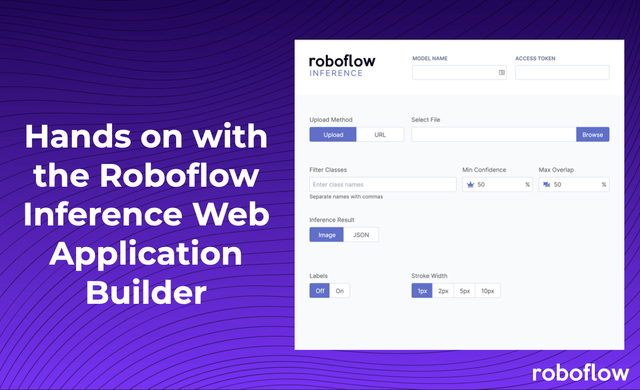
8 Nov 2020 • 3 min read Hands on with the Roboflow Infer Web Application Interface Builder After you train a model with Roboflow Train, you're provided with three immediate ways to use your model: a curl command, the direct URL, and an Example Web App. In this post, we'll demonstrate hands on how to use the web application (as well as how
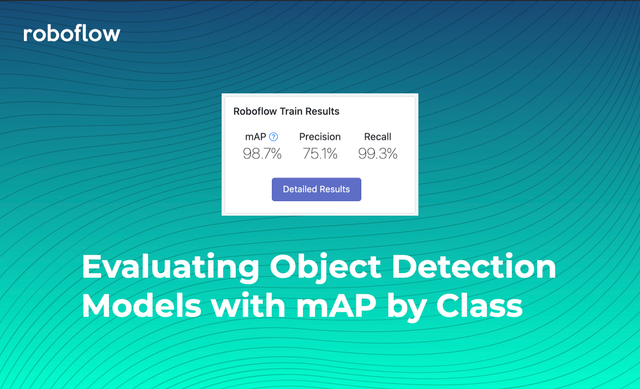
3 Nov 2020 • 3 min read Evaluating Object Detection Models with mAP by Class When evaluating an object detection model in computer vision, mean average precision is the most commonly cited metric for assessing performance. Remember, mean average precision is a measure of our model's ability to correctly predict bounding boxes at some confidence level – commonly mAP@0.5 or mAP@0.
28 Oct 2020 • 2 min read Train Test Split Guide and Overview In order to ensure our models are generalizing well (rather than memorizing training data), it is best practice to create a train, test split. That is, absent rigor, our models can easily overfit to a small subset of examples we've collected. Look no further than Tesla using computer
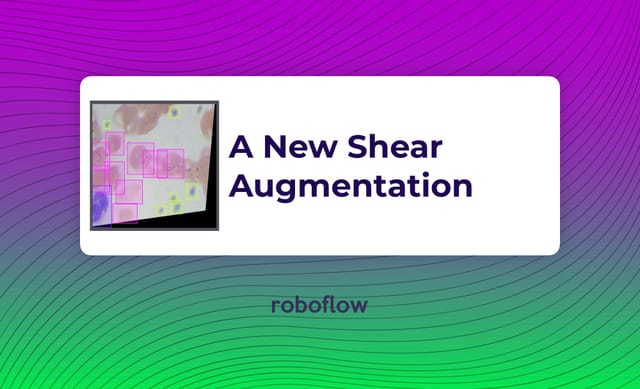
12 Oct 2020 • 2 min read Introducing an Improved Shear Augmentation Today, we introduce a new and improved shear augmentation. We'll walk through some details on the change, as well as some intuition and results backing up our reasoning.
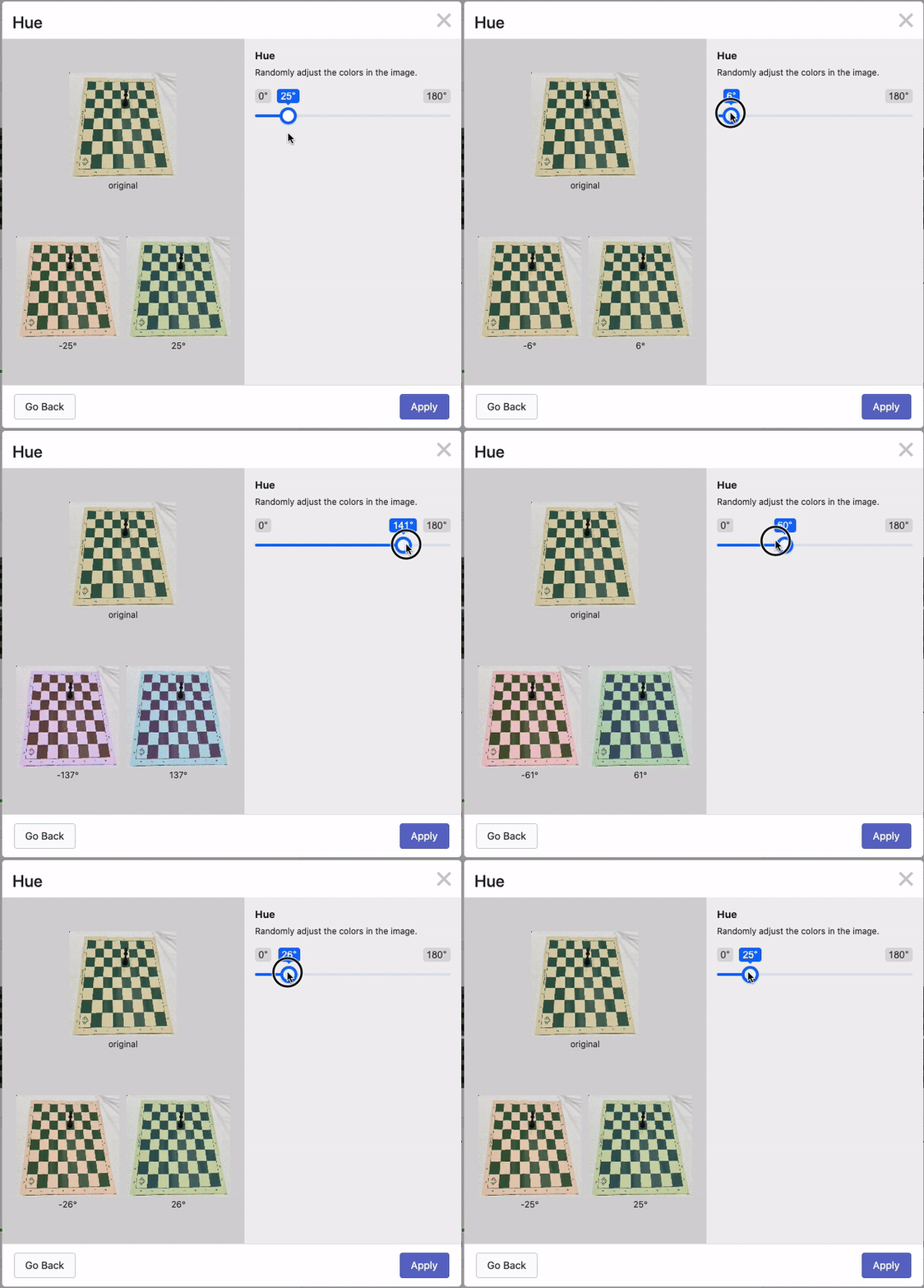
27 Sep 2020 • 3 min read Introducing Grayscale and Hue/Saturation Augmentations Roboflow is constantly improving how developers can build better computer vision models based on better input data. One key piece to this puzzle is enabling users to select augmentations that best improve dataset representation through augmentation. Augmentation creates altered training data based on existing examples. Image augmentation improves model performance,
2 Sep 2020 • 2 min read Explore Images, Annotations, and Metadata Easier Keeping track of images and their corresponding annotations is a challenge. Knowing which annotations map to which class, viewing image metadata, and seeing which images correspond to a training, validation, and testing set can quickly become a sprawling mess. We're introducing improved detailed image previews that enable our
21 Aug 2020 • 3 min read The crazy story of how we got our .com domain For almost a year, Roboflow (our computer vision dataset management tool) has lived at roboflow.ai. It's served us well but we have always lusted after the dot com. No longer! We managed to acquire roboflow.com from the giant German company that owned it since 2001. The
3 Aug 2020 • 5 min read Ontology Management for Computer Vision As their projects mature and dataset sizes grow, most teams wrestle with their workflow. Slicing and dicing data is more of an art than a science and you will want to experiment with what works best for your problem over time (and, in fact, you will probably go through this
29 Jul 2020 • 2 min read Advanced Augmentations in Roboflow Roboflow Pro now supports Cutout and Mosaic. Recent research has shown there is still plenty of room to grow model performance through augmenting our training data. Roboflow has written extensively about data augmentation and has highlighted some of the recent advances that have made new models like YOLOv4 and YOLOv5
23 Jul 2020 • 1 min read Roboflow can now ingest video! One of the most common questions we get is "How can I use computer vision object detection models with video?" The answer is simple: you treat each frame as an image. But, in practice, that has been quite cumbersome. It's meant fumbling around with command line
7 Jul 2020 • 3 min read Introducing Class Label Remapping and Omission With Roboflow Pro, you can now remap and omit class labels within Roboflow as a preprocessing step for your dataset version. Class management is a powerful tool to get the most out of your training data and your hard earned class label annotations.
27 May 2020 • 2 min read Introducing An Even Better Way to Preview Image Preprocessing and Augmentation Knowing what preprocessing and augmentation steps to apply is hard. We've written many individual posts about the steps required to make informed resize decisions (how to resize images in image preprocessing) to random crop augmentation (how to implement random crop augmentation) and many steps in between. Show, Don&
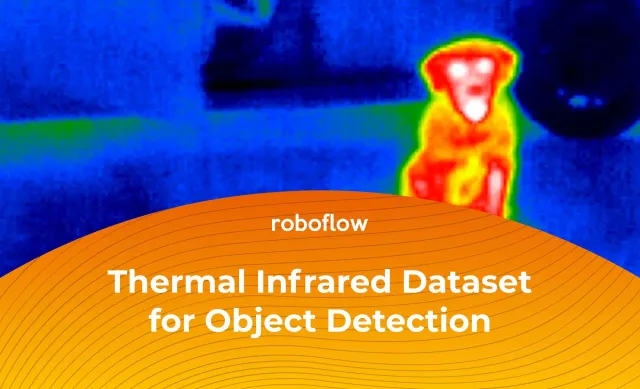
24 May 2020 • 3 min read Thermal Infrared Dataset for Object Detection Computer vision is performed on a wide array of imaging data: photographs, screenshots, videos. Commonly, this data is captured in similar perception to how humans see – along the visible red, green, and blue (RGB) color spectrum. However, there's growing interest in processing images beyond the visible color scheme.
29 Apr 2020 • 3 min read Breaking Down Roboflow's Health Check Dimension Insights Roboflow improves datasets without any user effort. This includes dropping zero-pixel bounding boxes and cropping out-of-frame bounding boxes to be in-line with the edge of an image. Roboflow also notifies users of potential areas requiring attention like severely underrepresented classes (as was present in the original hard hat object detection
28 Apr 2020 • 1 min read Introducing the Roboflow Model Library Over the past few months we've been building up a library of easy to use, open source computer vision models. We've now given them a home: the Roboflow Model Library. There, you can access information about each model (we will even be adding pros/cons, and
30 Mar 2020 • 1 min read Introducing Image Preprocessing and Augmentation Previews Knowing how an image preprocessing step or augmentation is going to appear before you write the code for it is essential. Is it worth it to figure out the right amount of brightness? Will rotation increase variability appropriately? Roboflow is introducing features to take out the guesswork: preprocessing and augmentation
18 Mar 2020 • 3 min read Introducing Bounding Box Level Augmentations Having training data that matches the diversity of your task is paramount to the success of your models. At Roboflow, we’re committed to providing you with state-of-the-art techniques that can improve your deep learning model’s performance -- without needing to collect any more data or even re-label images.