28 Jun 2021 • 2 min read An Introduction to ImageNet Learn what the ImageNet dataset is, how the dataset is structured, and applications for the dataset.
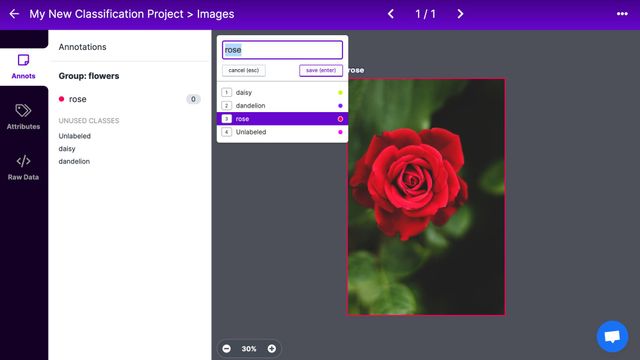
27 Jun 2021 • 2 min read Announcing Classification Support for Roboflow Annotate SUMMARY Roboflow Annotate now supports image classification labeling, expanding the platform beyond its original object detection focus. Teams can upload raw images or folder-organized datasets and assign class labels directly inside Roboflow, with training and deployment support for classification models to follow. This addition makes Roboflow a consistent workflow
21 Jun 2021 • 3 min read What Is the JAX Deep Learning Framework? You've probably heard of TensorFlow and PyTorch, and maybe you've even heard of MXNet - but there is a new kid on the block of machine learning frameworks - Google's JAX.
20 Jun 2021 • 5 min read For the People, By the People SUMMARY Computer vision models are only as representative as the datasets behind them, and gaps in that data encode real-world bias into deployed systems. This post examines what representative training data means across dimensions like skin tone, accessibility, religion, and gender, drawing on examples from hand detection to pedestrian
16 Jun 2021 • 3 min read The Joys of Sharing Models on OpenCV's Modelplace If we could all get together and share our model creation and deployments, that would be a very good thing for the computer vision community. Modelplace is a big step in that direction.
14 Jun 2021 • 6 min read How to Train MobileNetV2 On a Custom Dataset In this post, we will walk through how you can train MobileNetV2 to recognize image classification data for your custom use case.
14 Jun 2021 • 7 min read Building vs. Buying a Computer Vision Platform SUMMARY Building a computer vision pipeline in-house requires stitching together image upload, annotation, dataset versioning, training, deployment, and active learning, and the result is typically fragile, hard to maintain, and difficult to debug when components break. This post examines seven recurring problems teams encounter when building their own infrastructure,
13 Jun 2021 • 5 min read How to Train with Microsoft Azure Custom Vision and Roboflow SUMMARY Teams with existing Microsoft Azure credits can route their Roboflow datasets directly into Azure Custom Vision for training by linking API keys once at the workspace level. After that connection is established, any versioned Roboflow dataset (including preprocessing and augmentation steps applied in Roboflow) can be exported to Azure
6 Jun 2021 • 6 min read How to Train the Hugging Face Vision Transformer On a Custom Dataset Learn how to train a Hugging Face Vision Transformer on a custom dataset for classification.
2 Jun 2021 • 1 min read Roboflow Changelog: June 2021 Each month, we publish a list of recent features and additions to the Roboflow suite of products. The previous month's update is here. In May there has been a bevy of backend changes to support a huge user-facing release coming next month. The most noticeable updates this
30 May 2021 • 6 min read What Does "End to End" Really Mean? SUMMARY Building a working computer vision model once required stitching together custom pipelines, cloud services, and ML expertise. Roboflow closes that loop by covering every stage from raw image upload through annotation, dataset versioning, model training, and deployment to a hosted API endpoint, then feeds inference results back as training
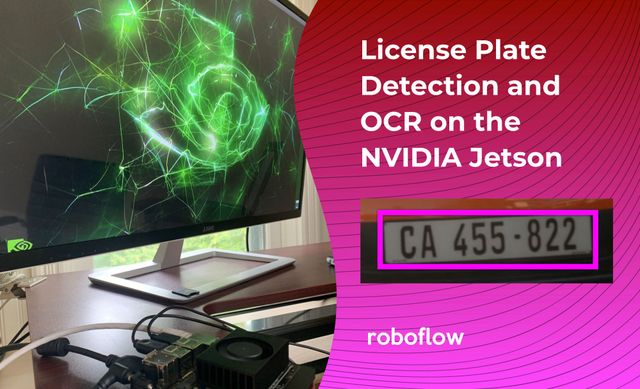
27 May 2021 • 6 min read License Plate Detection and OCR on an NVIDIA Jetson In this blog, we discuss how to train and deploy a custom license plate detection model to the NVIDIA Jetson. While we focus on the detection of license plates in particular, this guide also provides an end-to-end guide on deploying custom computer vision models to your NVIDIA Jetson on the edge.
25 May 2021 • 7 min read Roboflow Competitors and Alternatives SUMMARY Roboflow positions itself as an end-to-end computer vision platform that covers upload, annotation, dataset management, training, and deployment under one roof, which it contrasts against building a custom in-house pipeline (typically over 10x higher total cost of ownership) and against narrower point solutions that handle only
24 May 2021 • 3 min read What is a Cutout Augmentation and When Can it Help? SUMMARY Cutout augmentation, introduced in the YOLOv4 paper, randomly masks a square region of a training image to force the model to use broader image context rather than relying on a single dominant feature. It is most useful when objects in your dataset overlap or occlude one another (such as
24 May 2021 • 3 min read Why Roboflow Train? SUMMARY Roboflow Train is a managed model training service that converts an annotated dataset into a production-ready computer vision model without requiring ML infrastructure expertise or a dedicated machine learning team. Key benefits include a battle-tested training pipeline that avoids subtle dependency misconfigurations, transfer learning from general checkpoints,
19 May 2021 • 6 min read How Computer Vision Streamlines Risk Avoidance Workflows in Oil & Gas SUMMARY In Canadian oil and gas operations, regulators require companies to identify and notify landowners whose property falls within a proposed pipeline's consultation area, a task that traditionally meant manually digitizing house locations one by one in ArcGIS. This guest post by Douglas Long describes replacing that manual
17 May 2021 • 4 min read Prompt Engineering: The Magic Words to using OpenAI's CLIP SUMMARY OpenAI's CLIP model performs zero-shot image classification by matching text prompts to image content, but the exact wording of each prompt has a significant effect on accuracy. This post walks through that sensitivity using a rock, paper, scissors hand-sign dataset, showing how prompts like "
14 May 2021 • 10 min read License Plate Detection and OCR using Roboflow Inference API In this post, we’ll walk you through creating a license plate detection and OCR model using Roboflow that you can programmatically use for your own projects.
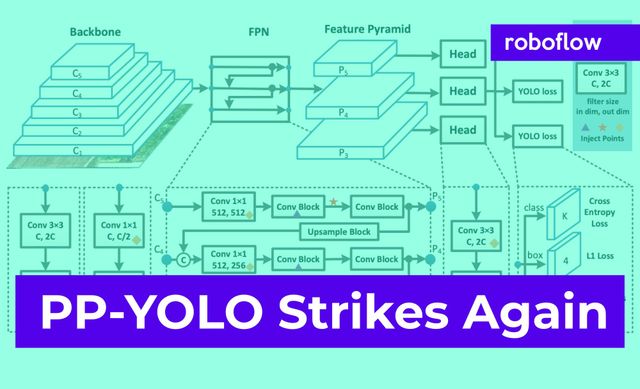
11 May 2021 • 4 min read PP-YOLO Strikes Again - Record Object Detection at 68.9FPS Object detection research is white hot! In the last year alone, we've seen the state of the art reached by YOLOv4, YOLOv5, PP-YOLO, and Scaled-YOLOv4. And now Baidu releases PP-YOLOv2, setting new heights in the object detection space.
5 May 2021 • 8 min read How to Train and Deploy Custom Models to Your OAK In this blog, we'll walk through the Roboflow custom model deployment process to the OAK and show just how seamless it can be.
5 May 2021 • 3 min read Partnering with Luxonis and OpenCV for Seamless Deployment to OpenCV AI Kit SUMMARY Roboflow and Luxonis have partnered to let users train a custom computer vision model and deploy it to the OAK-1 or OAK-D via a Docker container, eliminating the manual steps of model format conversion to OpenVINO and dependency setup that previously caused silent accuracy regressions. After training
4 May 2021 • 1 min read Roboflow Changelog: May 2021 The changelog is our compendium of monthly updates. If you want to take a walk down memory lane, you can being your trip back in time with last month's edition. In April, our major product efforts centered around launching our brand new user interface. This redesign of our
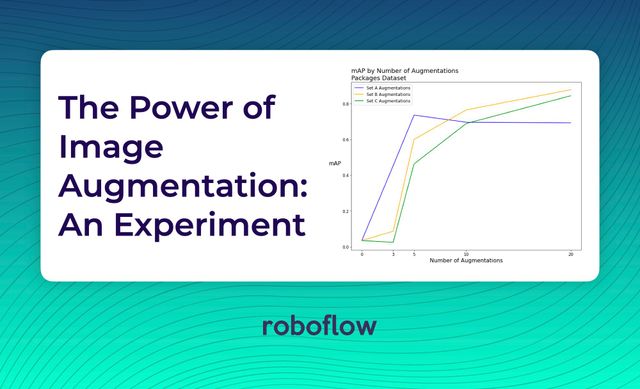
3 May 2021 • 8 min read The power of image augmentation: an experiment SUMMARY Image augmentation increases effective training set size by applying random transformations to existing images, but knowing how much to augment and which transforms to apply depends on your dataset. This experiment tests three variables across three public datasets of different sizes (26, 196, and 665 images of packages, raccoons,
26 Apr 2021 • 3 min read Image Augmentations for Aerial Datasets Learn how to apply image augmentations to aerial datasets for use in training computer vision models.