6 Jun 2021 • 6 min read How to Train the Hugging Face Vision Transformer On a Custom Dataset Learn how to train a Hugging Face Vision Transformer on a custom dataset for classification.
2 Jun 2021 • 1 min read Roboflow Changelog: June 2021 Each month, we publish a list of recent features and additions to the Roboflow suite of products. The previous month's update is here. In May there has been a bevy of backend changes to support a huge user-facing release coming next month. The most noticeable updates this
30 May 2021 • 6 min read What Does "End to End" Really Mean? SUMMARY Building a working computer vision model once required stitching together custom pipelines, cloud services, and ML expertise. Roboflow closes that loop by covering every stage from raw image upload through annotation, dataset versioning, model training, and deployment to a hosted API endpoint, then feeds inference results back as training
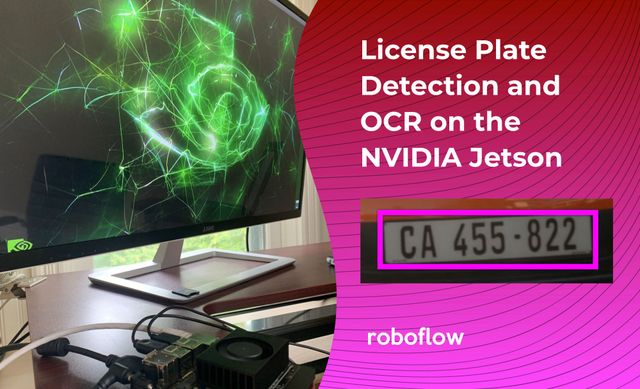
27 May 2021 • 6 min read License Plate Detection and OCR on an NVIDIA Jetson In this blog, we discuss how to train and deploy a custom license plate detection model to the NVIDIA Jetson. While we focus on the detection of license plates in particular, this guide also provides an end-to-end guide on deploying custom computer vision models to your NVIDIA Jetson on the edge.
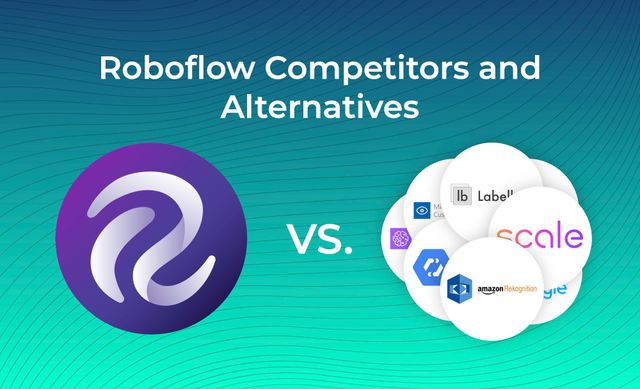
25 May 2021 • 7 min read Roboflow Competitors and Alternatives SUMMARY Roboflow positions itself as an end-to-end computer vision platform that covers upload, annotation, dataset management, training, and deployment under one roof, which it contrasts against building a custom in-house pipeline (typically over 10x higher total cost of ownership) and against narrower point solutions that handle only
24 May 2021 • 3 min read What is a Cutout Augmentation and When Can it Help? SUMMARY Cutout augmentation, introduced in the YOLOv4 paper, randomly masks a square region of a training image to force the model to use broader image context rather than relying on a single dominant feature. It is most useful when objects in your dataset overlap or occlude one another (such as
24 May 2021 • 3 min read Why Roboflow Train? SUMMARY Roboflow Train is a managed model training service that converts an annotated dataset into a production-ready computer vision model without requiring ML infrastructure expertise or a dedicated machine learning team. Key benefits include a battle-tested training pipeline that avoids subtle dependency misconfigurations, transfer learning from general checkpoints,
19 May 2021 • 6 min read How Computer Vision Streamlines Risk Avoidance Workflows in Oil & Gas SUMMARY In Canadian oil and gas operations, regulators require companies to identify and notify landowners whose property falls within a proposed pipeline's consultation area, a task that traditionally meant manually digitizing house locations one by one in ArcGIS. This guest post by Douglas Long describes replacing that manual
17 May 2021 • 4 min read Prompt Engineering: The Magic Words to using OpenAI's CLIP SUMMARY OpenAI's CLIP model performs zero-shot image classification by matching text prompts to image content, but the exact wording of each prompt has a significant effect on accuracy. This post walks through that sensitivity using a rock, paper, scissors hand-sign dataset, showing how prompts like "
14 May 2021 • 10 min read License Plate Detection and OCR using Roboflow Inference API In this post, we’ll walk you through creating a license plate detection and OCR model using Roboflow that you can programmatically use for your own projects.
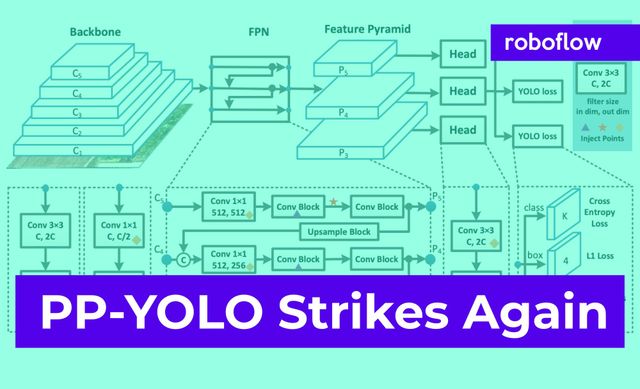
11 May 2021 • 4 min read PP-YOLO Strikes Again - Record Object Detection at 68.9FPS Object detection research is white hot! In the last year alone, we've seen the state of the art reached by YOLOv4, YOLOv5, PP-YOLO, and Scaled-YOLOv4. And now Baidu releases PP-YOLOv2, setting new heights in the object detection space.
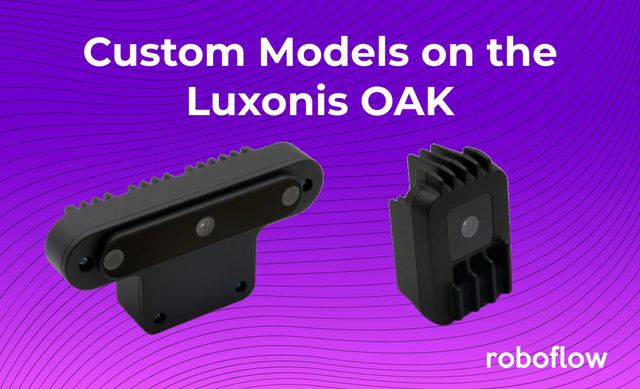
5 May 2021 • 8 min read How to Train and Deploy Custom Models to Your OAK In this blog, we'll walk through the Roboflow custom model deployment process to the OAK and show just how seamless it can be.
5 May 2021 • 3 min read Partnering with Luxonis and OpenCV for Seamless Deployment to OpenCV AI Kit SUMMARY Roboflow and Luxonis have partnered to let users train a custom computer vision model and deploy it to the OAK-1 or OAK-D via a Docker container, eliminating the manual steps of model format conversion to OpenVINO and dependency setup that previously caused silent accuracy regressions. After training
4 May 2021 • 1 min read Roboflow Changelog: May 2021 The changelog is our compendium of monthly updates. If you want to take a walk down memory lane, you can being your trip back in time with last month's edition. In April, our major product efforts centered around launching our brand new user interface. This redesign of our
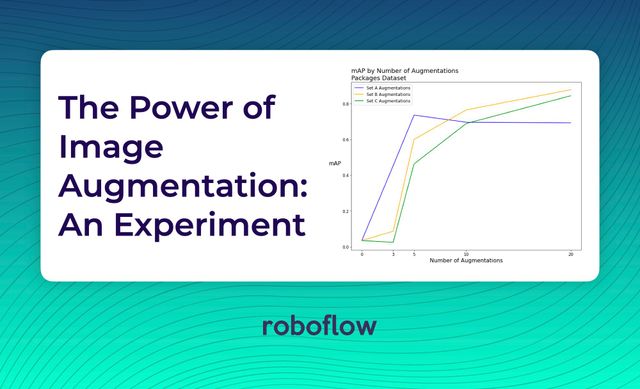
3 May 2021 • 8 min read The power of image augmentation: an experiment SUMMARY Image augmentation increases effective training set size by applying random transformations to existing images, but knowing how much to augment and which transforms to apply depends on your dataset. This experiment tests three variables across three public datasets of different sizes (26, 196, and 665 images of packages, raccoons,
26 Apr 2021 • 3 min read Image Augmentations for Aerial Datasets Learn how to apply image augmentations to aerial datasets for use in training computer vision models.
25 Apr 2021 • 6 min read How We at Roboflow Do Remote Work We'd like to think we've worked remotely pretty successfully: we raised a seed round, we've come in first place on the Pioneer leaderboard for a record-breaking 25-weeks in a row, we publish at least five pieces of content each week (check out
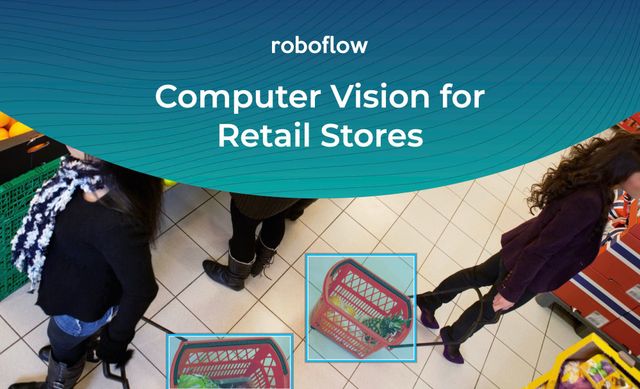
21 Apr 2021 • 3 min read Computer Vision is Shaking Up Brick-and-Mortar Retail SUMMARY Computer vision is moving well beyond self-checkout lanes in brick-and-mortar retail. Retailers are deploying camera-based systems to automate shelf inventory auditing, flag depleted stock, recognize repeat customers for personalized promotions, monitor product interaction to inform merchandising decisions, and detect theft at point of sale. Each
18 Apr 2021 • 2 min read Roboflow's new User Interface SUMMARY Roboflow's redesigned interface reorganizes the end-to-end computer vision workflow around four clearer stages. Datasets are now called Projects to reflect that they hold images, annotations, versions, and models together. Upload and Annotate have dedicated spots in the sidebar, dataset version generation is now a sequential
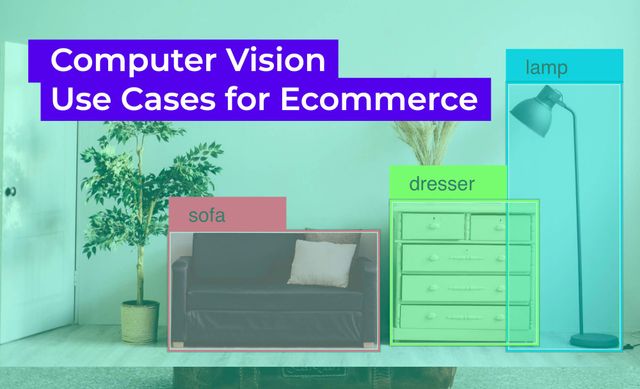
18 Apr 2021 • 3 min read Top 5 Ways Computer Vision Can Improve Online Shopping and Boost Revenue SUMMARY Computer vision addresses several practical friction points in online retail by working directly with the product image libraries that ecommerce platforms already maintain. Visual search lets shoppers upload a photo and retrieve similar items without needing precise descriptive terms. Automated image classification and attribute tagging can process thousands of
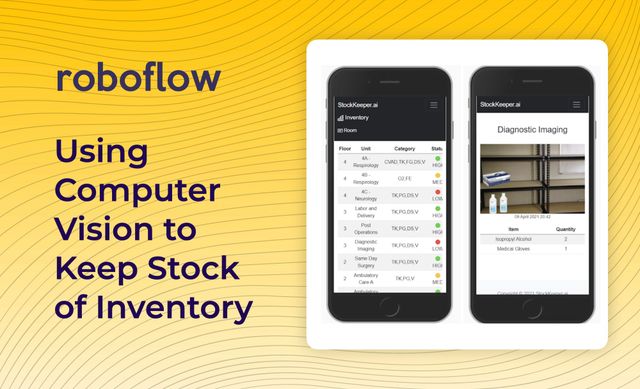
18 Apr 2021 • 3 min read How to Use Computer Vision to Keep Stock of Inventory Learn how to use computer vision to track inventory in logistics facilities.
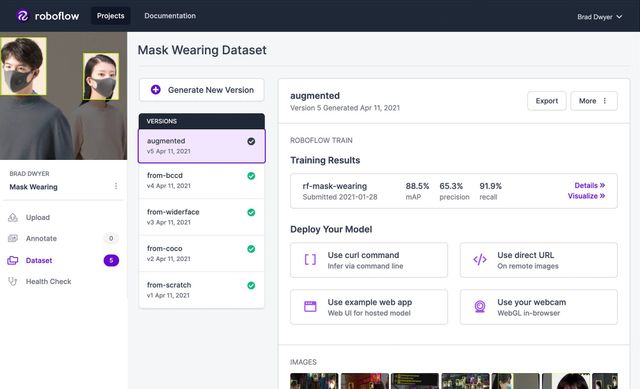
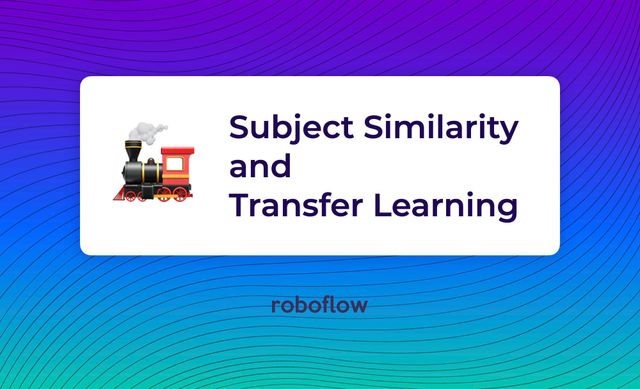
11 Apr 2021 • 4 min read How important is subject similarity for transfer learning? SUMMARY An experiment comparing four transfer learning starting points on a mask-wearing detection dataset reveals that domain similarity matters more than pretraining scale. A checkpoint pretrained on WIDER Face (a face-focused dataset) outperformed the COCO-pretrained baseline despite COCO containing far more images and categories, while a blood-
11 Apr 2021 • 3 min read Our Favorite Computer Vision Courses SUMMARY The right computer vision course depends heavily on what you want to build and how much you already know. This guide organizes recommendations by learner type: Andrew Ng's AI for Everyone for non-technical conceptual grounding, fast.ai and Roboflow's own tutorials for practitioners who
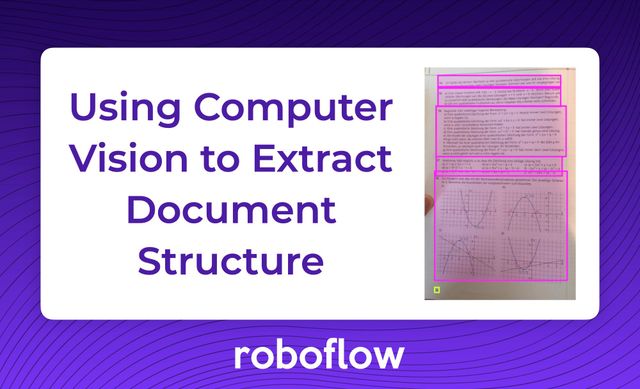
6 Apr 2021 • 3 min read Using Computer Vision to Extract Document Structure SUMMARY A student in Germany trained a custom object detection model on roughly 1,000 scanned school book pages to identify individual tasks and page numbers, reducing the data that needs to be transmitted during remote learning by sending extracted text instead of full images. The project used Roboflow Annotate