16 May 2023 • 7 min read How to Train YOLO-NAS on a Custom Dataset YOLO-NAS is the latest state-of-the-art real-time object detection model. Learn how to train YOLO-NAS on your custom data.
21 Apr 2023 • 5 min read Zero-Shot Image Annotation with Grounding DINO and SAM - A Notebook Tutorial In this comprehensive tutorial, discover how to speed up your image annotation process using Grounding DINO and Segment Anything Model. Learn how to convert object detection datasets into instance segmentation datasets, and use these models to automatically annotate your images.
31 Mar 2023 • 5 min read Synthetic Data Generation with NVIDIA and Roboflow Learn how to build computer vision models that leverage synthetic data using NVIDIA Omniverse and Roboflow.
30 Mar 2023 • 6 min read Grounding DINO : SOTA Zero-Shot Object Detection Most object detection models are trained to identify a narrow predetermined collection of classes. Zero-shot detectors like Grounding DINO want to break this status quo by making it possible to detect new objects without re-training a model.
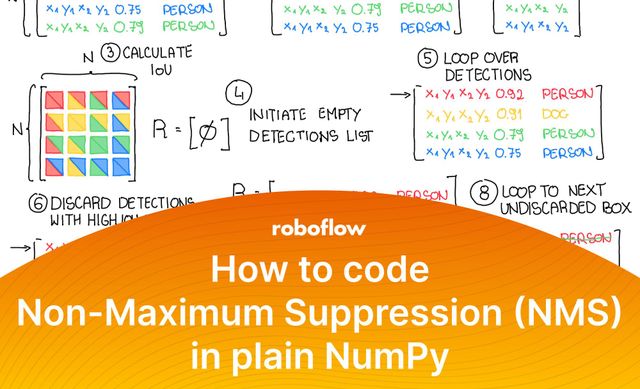
8 Mar 2023 • 4 min read How to Code Non-Maximum Suppression (NMS) in Plain NumPy SUMMARY Double detection, where an object detection model fires multiple overlapping bounding boxes on the same object, is a common issue that breaks downstream analytics like counting and tracking. Non-Maximum Suppression (NMS) resolves this by computing Intersection over Union (IoU) across all predicted boxes and discarding lower-confidence duplicates
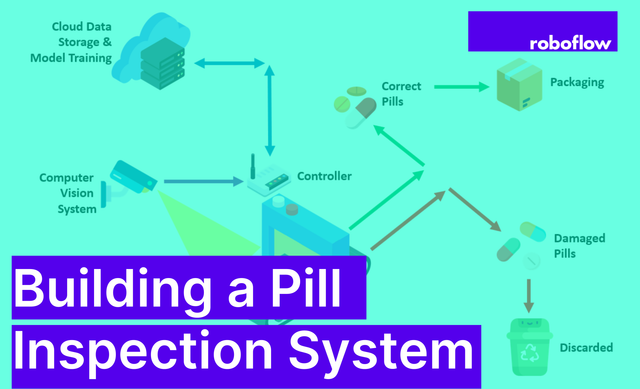
24 Feb 2023 • 4 min read Building a Computer Vision Assisted Pill Inspection System SUMMARY Detecting damaged pills and foreign matter on a production line requires a computer vision model that runs at inspection speed and with high recall, since incorrect pills reaching consumers pose direct health and compliance risks. This tutorial builds a two-class detection system (damaged pills, foreign matter) using the
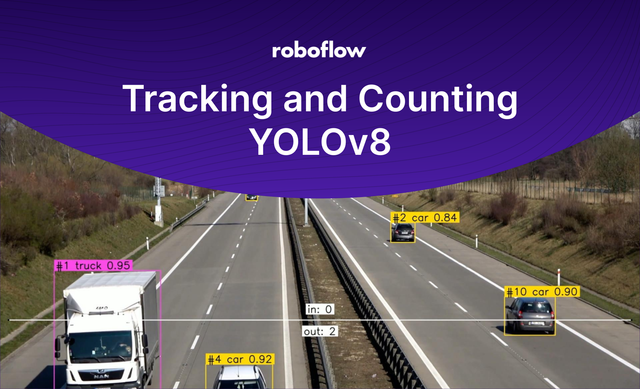
1 Feb 2023 • 4 min read Track and Count Objects Using YOLOv8 Counting moving objects is one of the most popular use cases in computer vision. It is used, among other things, in traffic analysis and as part of the automation of manufacturing processes. That is why understanding how to do it well is crucial for any CV engineer.
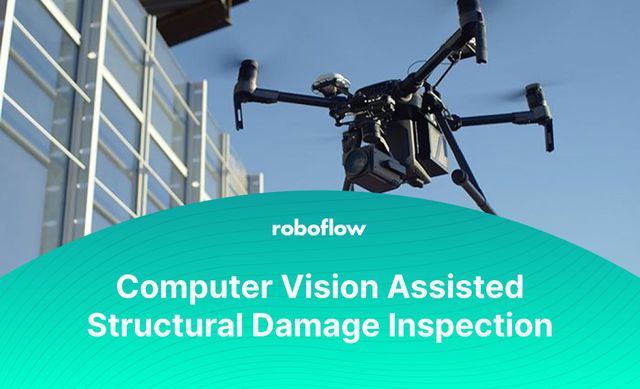
15 Dec 2022 • 8 min read Computer Vision Assisted Structural Damage Inspection Using Drones In this post, Timothy Malche walks through how to inspect structural damage with computer vision and drones.
12 Dec 2022 • 3 min read Launch: Roboflow Integration with Ultralytics HUB SUMMARY Roboflow and Ultralytics HUB now support a direct integration that connects dataset management with model training and model-assisted labeling. Users can export any Roboflow dataset to Ultralytics HUB for custom YOLOv5 training, then bring the trained model weights back into Roboflow to power Label Assist for annotating under-
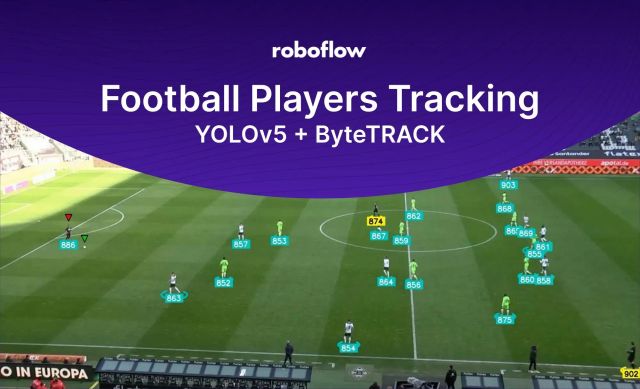
9 Dec 2022 • 4 min read Track Football Players with Computer Vision In this post, we use a YOLOv5 detection model and state-of-the-art tracker ByteTRACK to track football players.
28 Nov 2022 • 6 min read 📸 Roboflow 100: A Multi-Domain Object Detection Benchmark Roboflow 100 (RF100) is a crowdsourced object detection benchmark. The dataset consists of 100 datasets, 7 imagery domains, 224,714 images, and 829 class labels with over 11,170 labeling hours.
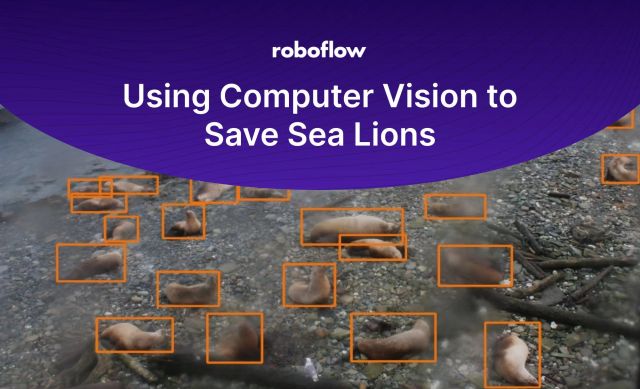
18 Nov 2022 • 5 min read Using Computer Vision to Save Sea Lions SUMMARY Steller sea lion numbers in Alaska's western Aleutian Islands have dropped 94% over 30 years, and NOAA researchers studying the cause generate thousands of remote camera images that must be reviewed manually. A computer vision tool called Steller Sight automates the triage step, classifying each image as
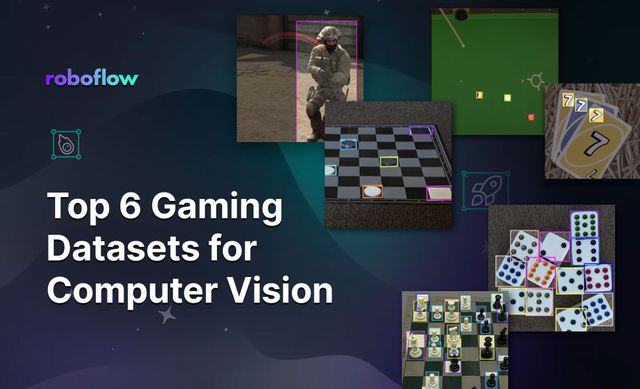
15 Nov 2022 • 5 min read Top 6 Gaming Datasets for Computer Vision Projects SUMMARY Six gaming-oriented datasets from Roboflow Universe cover a range of real-world and digital game scenarios: a 350-image domino pip dataset for score tracking, a 6.3K-image Counter-Strike player dataset with CT and T team labels, draughts and chess piece detection sets, a billiards ball
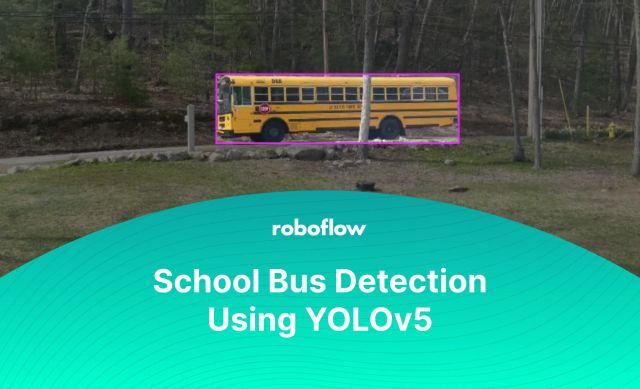
27 Oct 2022 • 7 min read School Bus Detection Using YOLOv5 (Tutorial – Part 2) Learn how to detect school buses using YOLOv5.
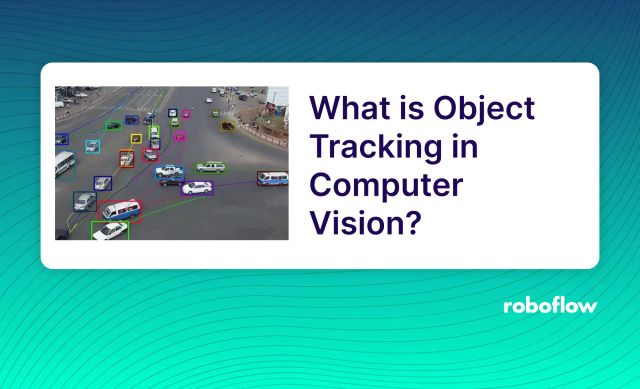
21 Oct 2022 • 6 min read What is Object Tracking in Computer Vision? Learn about object tracking and how it is used in computer vision.
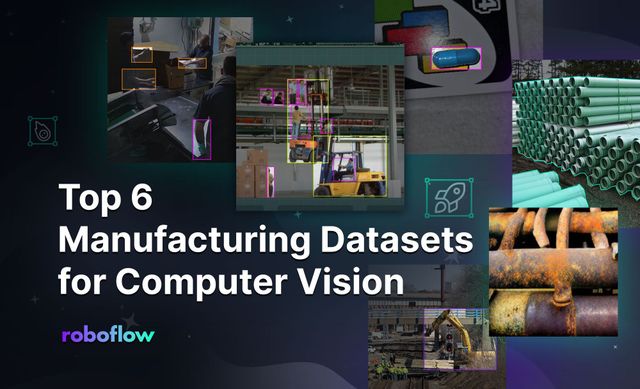
20 Oct 2022 • 5 min read Top 6 Manufacturing Datasets for Computer Vision Explore six manufacturing datasets you can use for computer vision projects.
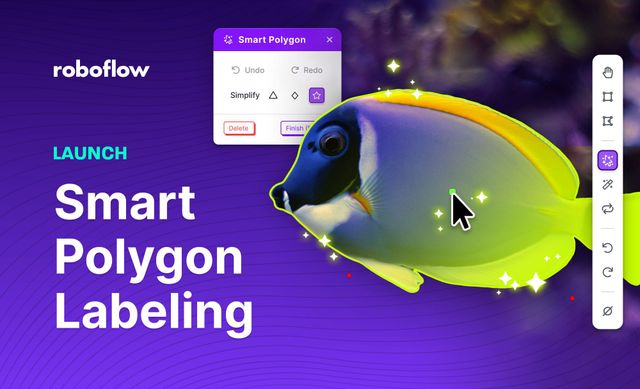
28 Sep 2022 • 4 min read Launch: Smart Polygon Labeling SUMMARY Roboflow Annotate's Smart Polygon tool uses a machine learning model behind the scenes to generate a polygon label with a single click on an object, reducing what previously required many manual point placements to a near-instant operation. Precise polygon annotations are required for training instance segmentation
16 Aug 2022 • 6 min read Building Custom Computer Vision Models with NVIDIA TAO Toolkit and Roboflow NVIDIA's TAO Toolkit provides a framework for fine-tuning popular computer vision models using your own data. In this tutorial, we'll be demonstrating how to use Roboflow to curate a high-quality computer vision dataset to use with NVIDIA's TAO Toolkit.
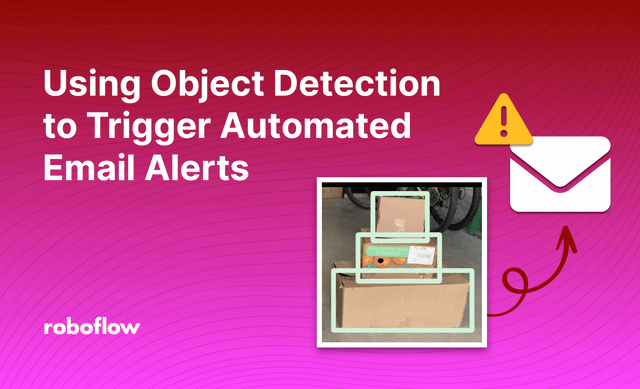
8 Aug 2022 • 4 min read How to Use Object Detection to Trigger Automated Email Alerts Learn how to trigger automated email alerts when an object detection model identifies the location of an object.
3 Aug 2022 • 4 min read Use Raspberry Pi and Luxonis OAK to Deploy Vision Models in Robotics Learn how to use the Raspberry Pi and Luxonis OAK to run computer vision models for robotics projects.
1 Aug 2022 • 4 min read How to Deploy YOLOv7 to a Jetson Nano We'll be creating a dataset, training a YOLOv7 computer vision model, and deploying it to a Jetson Nano to perform real-time object detection.
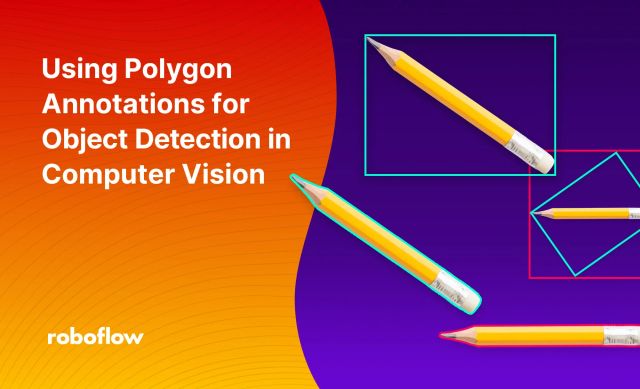
14 Jul 2022 • 4 min read Using Polygon Annotations for Object Detection in Computer Vision SUMMARY Polygon annotations improve object detection model training even when the model only outputs bounding boxes, because the extra shape data makes augmentations more accurate. Spatial transforms like rotation and cropping stay tightly fitted to the object with polygons, while bounding boxes pick up background pixels that dilute training signal.
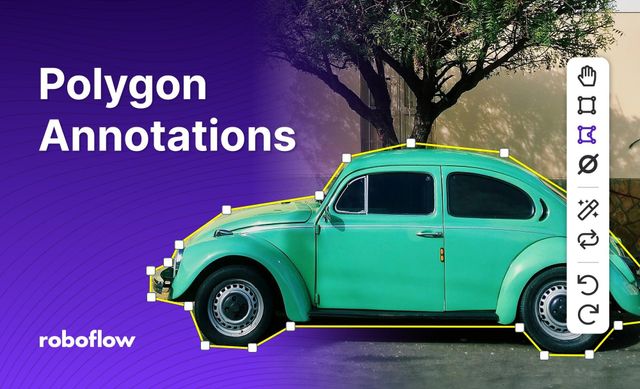
13 Jul 2022 • 3 min read How to Use Polygon Annotation and Labeling with Roboflow Polygons have traditionally been used for training image segmentation models, but they can also improve the training of object detection models. Object detection models are typically much faster and more widely supported, so they're still the best choice for solving many problems.
13 Jul 2022 • 6 min read How to Train a YOLOv7 Model on a Custom Dataset SUMMARY This tutorial walks through training a YOLOv7 object detection model on a custom dataset using a Google Colab notebook, covering dependency installation, loading a dataset from Roboflow Universe in YOLOv7 format, running training, evaluating results with detect.py, and deploying the model via API or to edge devices like