27 Jul 2020 • 6 min read VoTT for Image Annotation and Labeling A guide on using VoTT to label your own computer vision dataset.
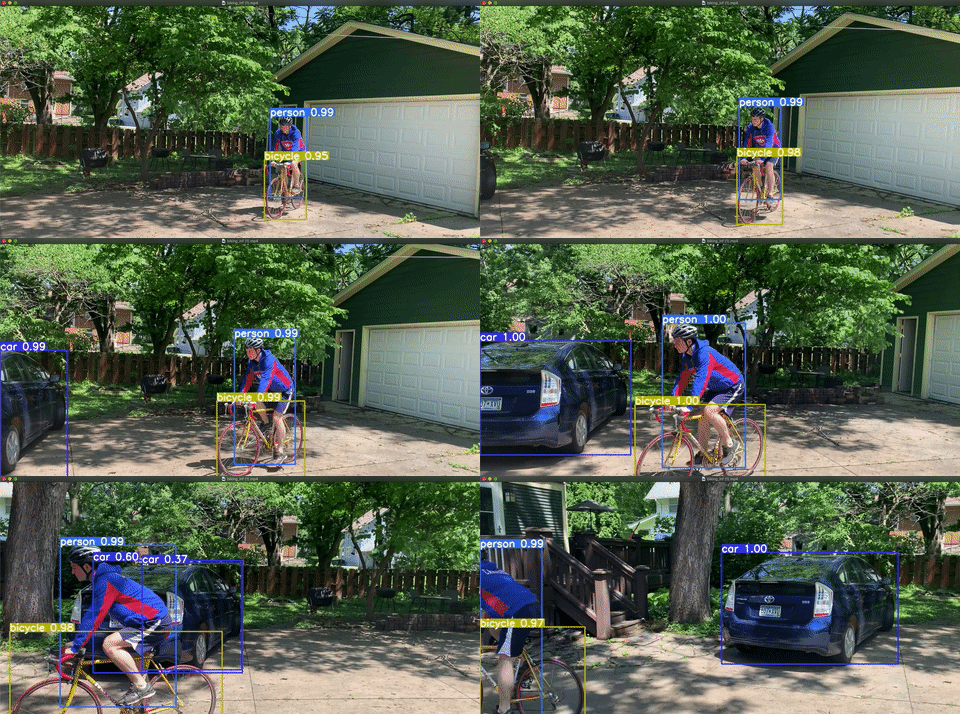
23 Jul 2020 • 1 min read Roboflow can now ingest video! One of the most common questions we get is "How can I use computer vision object detection models with video?" The answer is simple: you treat each frame as an image. But, in practice, that has been quite cumbersome. It's meant fumbling around with command line
21 Jul 2020 • 6 min read Improving Infrastructure Asset Management with Computer Vision The below post is a lightly edited guest post from Result! Data, a Netherlands-based consultancy providing leading digital services. The Roboflow team thanks Gerard Mol (Managing Partner) and Brand Hop (Chief Data Science) for their contributions. View their original post on detecting road signs with computer vision. Introduction Result! Data
18 Jul 2020 • 9 min read Retail Store Item Detection using YOLOv5 Guest post by Roboflow user, Shayan Ali Bhatti, who used Roboflow to train an object detection model to identify items in grocery stores. Reposted with permission. Original content here. In this article, I present an application of the latest version of popular deep learning algorithm YOLO i.e. YOLOv5, to
16 Jul 2020 • 8 min read How to Train a TensorFlow 2 Object Detection Model Learn how to train a TensorFlow 2 object detection model on a custom dataset.
14 Jul 2020 • 3 min read The TensorFlow 2 Object Detection Library is Here The TensorFlow Object Detection API has been upgraded to TensorFlow 2.0. We discuss here what the new library means for computer vision developers and why we are so excited about the new TensorFlow 2.0 Object Detection library! Furthermore, we are excited to announce Roboflow's model library
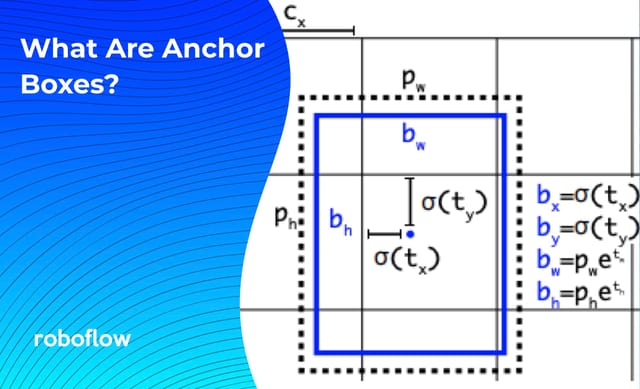
13 Jul 2020 • 3 min read What are Anchor Boxes in Object Detection? Learn what anchor boxes are and why they are used in object detection.
10 Jul 2020 • 5 min read Convert Supervisely Annotations in Two Minutes In this post, we walk through how to download data from Supervise.ly and convert Supervise.ly annotations to YOLO Darknet format specifically, and more generally convert Supervisely JSON to any other object detection annotation format for use in any of your custom computer vision models. This guide is imperative
7 Jul 2020 • 3 min read Introducing Class Label Remapping and Omission With Roboflow Pro, you can now remap and omit class labels within Roboflow as a preprocessing step for your dataset version. Class management is a powerful tool to get the most out of your training data and your hard earned class label annotations.
5 Jul 2020 • 1 min read Roboflow vs Scale A question we often get is "How is Roboflow different from Scale?" The truth is, Roboflow works great in conjunction with outsourced labeling services like Scale, LabelBox, SuperAnnotate, Amazon SageMaker Ground Truth, and Mechanical Turk. We support importing your annotations directly from many of their APIs and Roboflow&
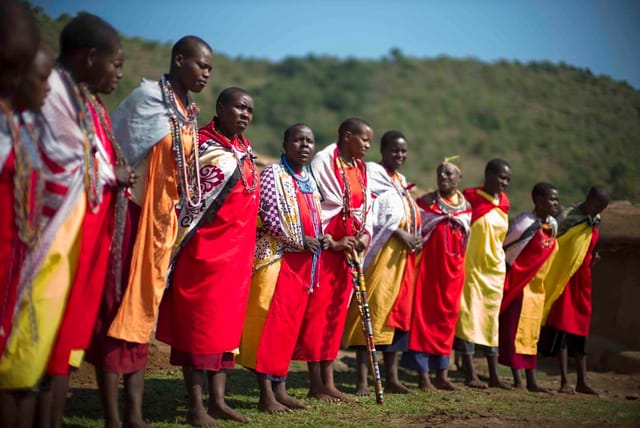
1 Jul 2020 • 3 min read How AI Acts as a Human Rights Watchdog for the Maasai People The Maasai are an indigenous ethnic group in modern Kenya and northern Tanzania, tracing routes to the Great Rift Valley in East Africa as early as the 15th century. Roughly two million Maasai people retain rich cultural traditions, including leading a semi-nomadic life and subsisting predominantly on their cattle, which
1 Jul 2020 • 6 min read Train a YOLOv4-tiny Model on a Custom Dataset Learn how to train a YOLOv4-tiny model on a custom dataset.
29 Jun 2020 • 15 min read What is YOLOv5? A Guide for Beginners. In this article, we discuss what is new in YOLOv5, how the model compares to YOLO v4, and the architecture of the new v5 model.
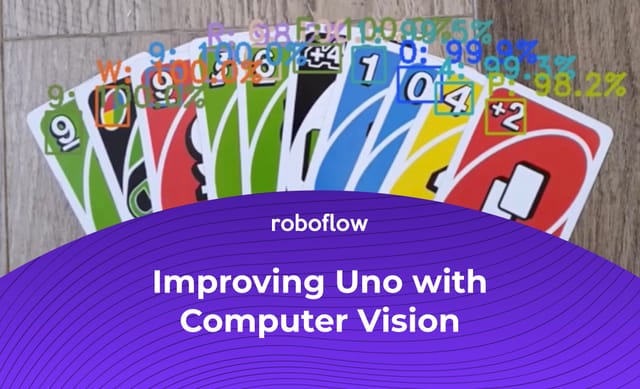
28 Jun 2020 • 6 min read Improving Uno with Computer Vision (Plus the Dataset so You Can Too) You've likely been playing Uno wrong all of your life. It's a simple game, right? Rid your hand of all your cards first, and you're the victor. In fact, Uno is a multi-stage game where players accumulate points across multiple hands. The first player
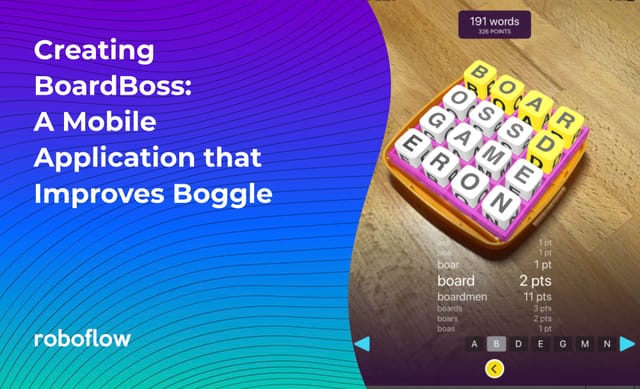
25 Jun 2020 • 6 min read Creating BoardBoss: A Mobile Application that Improves Boggle How Making an iOS Application Inspired Roboflow Before the Roboflow team was making tools for improving how developers apply computer vision to their problems, we were making our own computer vision applications. One of those applications, Magic Sudoku, even won Product Hunt's Augmented Reality App of the Year.
24 Jun 2020 • 9 min read Why and How to Implement Random Rotate Data Augmentation Learn how to apply a random rotate data augmentation to images for use in training computer vision models.
24 Jun 2020 • 9 min read How to Train Detectron2 on Custom Object Detection Data Learn how to train a Detectron2 model on a custom object detection dataset.
19 Jun 2020 • 5 min read How to Convert Annotations from PASCAL VOC to YOLO Darknet A bedrock of computer vision is having labeled data. In object detection problems, those labels define bounding box positions in a given image. As computer vision rapidly evolves, so, too, do the various file formats available to describe the location of bounding boxes: PASCAL VOC XML, COCO JSON, various CSV
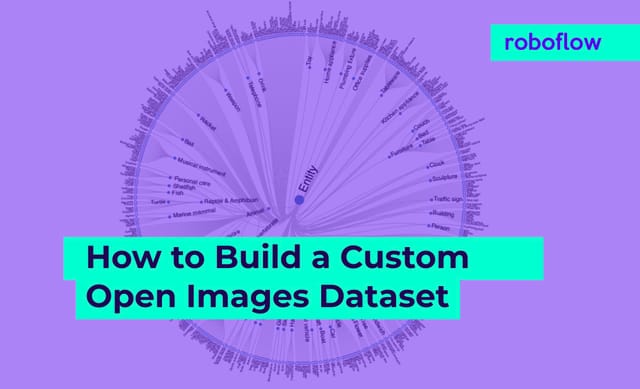
18 Jun 2020 • 4 min read How to Build a Custom Open Images Dataset for Object Detection We are excited to announce integration with the Open Images Dataset and the release of two new public datasets encapsulating subdomains of the Open Images Dataset: Vehicles Object Detection and Shellfish Object Detection. In this post, we will walk through how to make your own custom Open Images dataset. Vehicles
12 Jun 2020 • 16 min read Responding to the Controversy about YOLOv5 We appreciate the machine learning community's feedback, and we're publishing additional details on our methodology. (Note: On June 14, we've incorporated updates from YOLOv4 author Alexey Bochkovskiy, YOLOv5 author Glenn Jocher, and others in the community.) Don't care about the controversy? Skip
10 Jun 2020 • 4 min read YOLOv5 is Here: State-of-the-Art Object Detection at 140 FPS Less than 50 days after the release YOLOv4, YOLOv5 improves accessibility for realtime object detection. June 29, YOLOv5 has released the first official version of the repository. We wrote a new deep dive on YOLOv5. June 12, 8:08 AM CDT Update: In response to to community feedback, we have
10 Jun 2020 • 10 min read How to Train a YOLOv5 Model On a Custom Dataset Learn how to train a YOLOv5 model on a custom dataset.
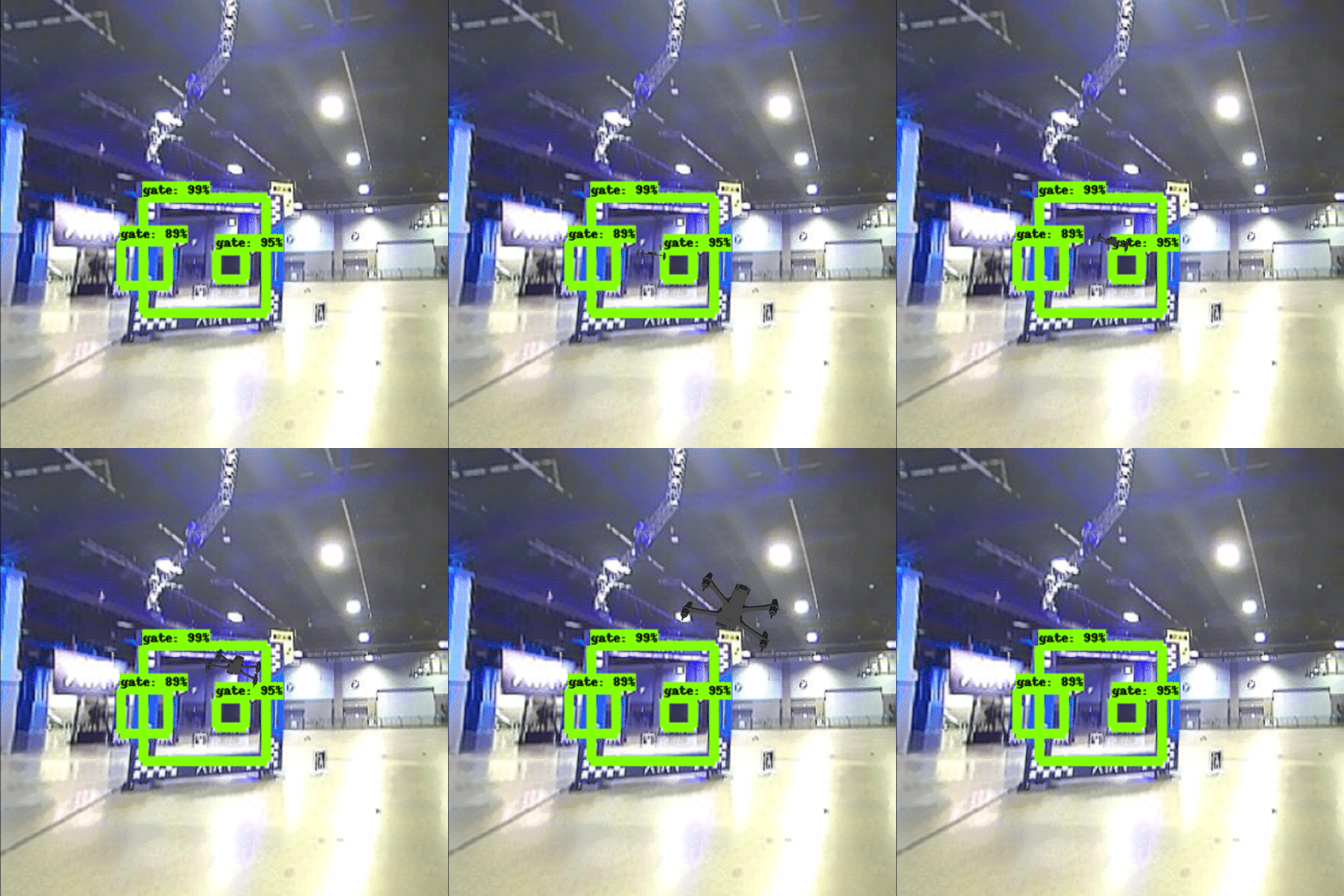
3 Jun 2020 • 3 min read Teaching a Drone to Fly on Auto Pilot with Roboflow Drones are enabling better disaster response, greener agriculture, safer construction, and so much more. Increasingly, drones are even achieving the ability to perform these tasks completely or semi-autonomously – enabling greater precision and efficiency. Thus, when Victor Antony, a data scientist from the University of Rochester, was confronted with creating the
2 Jun 2020 • 7 min read Getting Started with Data Augmentation in Computer Vision Data augmentation in computer vision is not new, but recently data augmentation has emerged on the forefront of state of the art modeling. YOLOv4, a new state of the art image detection model, uses a variety of data augmentation techniques to boost the models performance on COCO, a popular image